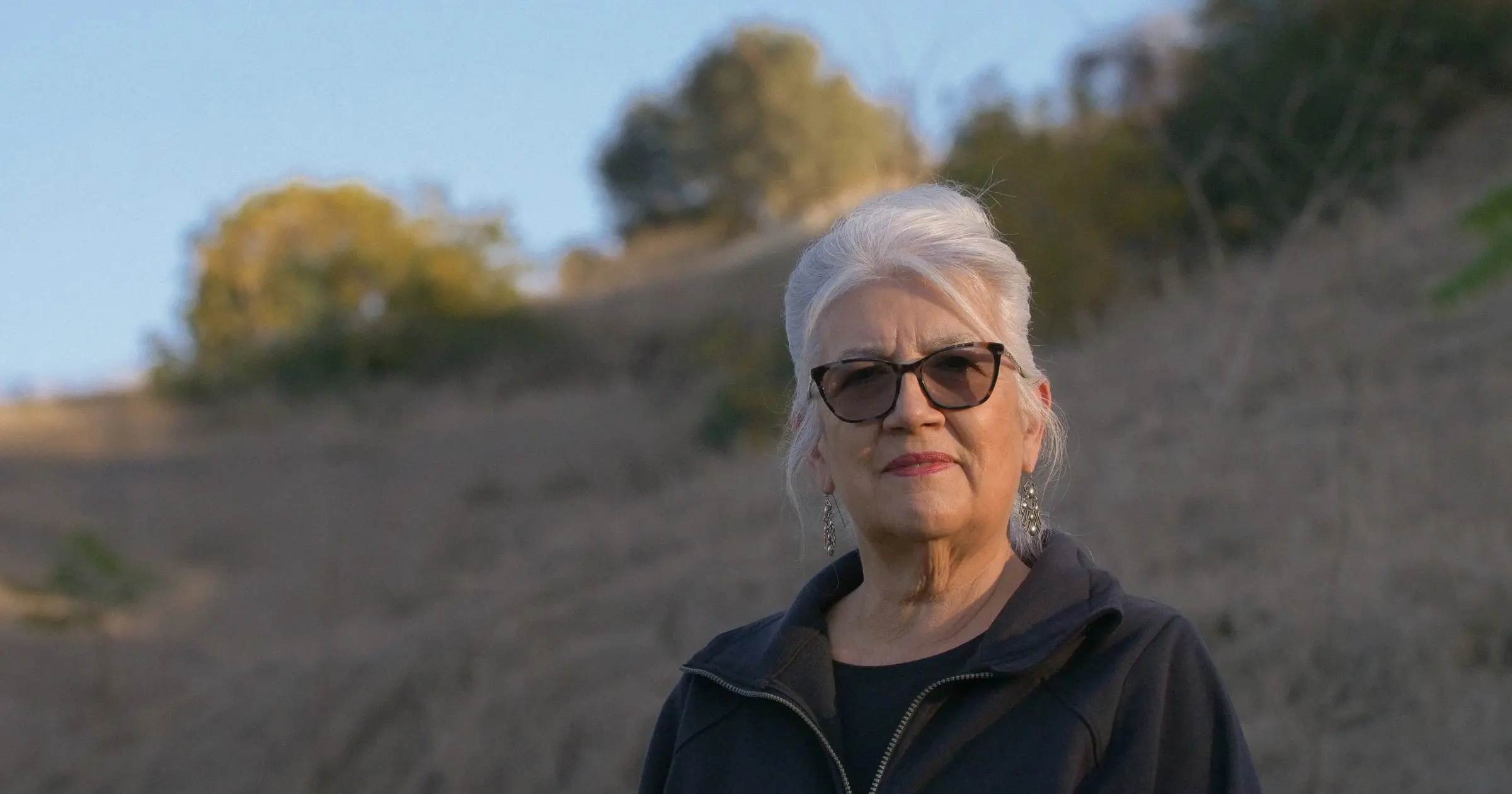
How water — and a decades-long community effort — is saving Elephant Hill
Nathaly Moreno in conversation with Elva Yañez
Audio Transcript
ELVA: So there is no way that we could have protected that hillside by ourselves. You know, just a few of us who were sort of the inner circle, right. Now that we're getting positive attention to Elephant Hill, you know, it's taken a lot of years of not having people to pay attention to all of a sudden we're getting attention. And that feels so good.
NATHALY: Thank you so much for sitting down with me. I appreciate it. If you could just please introduce yourself, your full name, where you live.
ELVA: My name is Elva Yañez, and I live here in El Sereno, which is right across the way from the 110-acre Elephant Hill.
NATHALY: You've been organizing around Elephant Hill now for 20 years. And I just want to ask if you could describe it for the folks that are unfamiliar with it.
ELVA: So Elephant Hill is 110 acres of open space. It's surrounded by residential development. But this is part of the Repetto Hills. The Repetto Hills are are very steep in some places with very high inclines and, you know, steep, ravines and, you know, these hills have been here for quite some time and they extend kind of from Dodger Stadium all the way to past Whittier, go through Monterey Park and things like that. And so Elephant Hill has been here forever. Residential areas were built around it. The southern and eastern portions of Elephant Hill, the residential areas surrounding Elephant Hill were redlined communities back in the day. And as a result of that, there was very little interest in investing in the hillsides here for residential development.
So because of that and because who lived here, which is, primarily a working class Latino community, for generations there was no residential construction. They bypassed this area. And in addition, the conservation movement also bypassed this area. When that got started, I guess in the 60s and 70s. Up until about 2004, 2003, there was very little interest in developing this area. But there was a residential development, a historic residential development that kind of ebbed and flowed in terms of its process for moving forward. And that's the residential development that we were able to prevent from moving forward, given the threats that they posed to the surrounding neighborhoods.
So in terms of the open space, it's biologically sensitive. I'm not a naturalist. So this is what I've learned from other people. You know, there's all sorts of wildlife living there. Coyotes, bobcats, reptiles, snakes. Many, many species of birds. Hawks, owls, lots of rabbits that come out to the neighborhood. They're really cute. And in addition to that, there's a lot of native plants. So there's, given the, where we're at, the, black walnut tree is pretty prevalent on the north-facing hillsides. We also have oak trees and, you know, the walnut oak woodland type plants that grow there.
What else can I say, there's an underground spring, which is the reason that we're here talking today in the first place, because two years ago, when we started having the heavy rains, the underground spring emerged once again and came to life. And, when we showed that, the evidence of that spring to the Council for Watershed Health, they encouraged us to apply for a Technical Research Program grant feasibility study to see what kind of, green stormwater infrastructure would be suitable for the five acres of Elephant Hill that the Mountains Recreation Conservation Authority owns.So they managed that. And, as a result of their interest, we were able to apply for the feasibility study on behalf of the MRCA, since they didn't have the capacity at that time to apply for it. We did that. And so here we are. In terms of the organization, we emerged out of that land use battle back 20 years ago, and we were very informal. We were a volunteer-based community organization that didn't have a whole lot of structure or, yeah, not very much social infrastructure within the organization itself. And that helped us. You know, we were very flexible. We were very nimble from a strategic standpoint. And for, I would say, the first ten years, a lot of our work was very policy-oriented, right? We were advocacy-oriented, doing door-to-door organizing, getting people to sign on to letters, going to the council office, all in the name of protecting Elephant Hill from environmental injustice related to land use.
When I moved here, I was working in public health, but on tobacco control issues preventing smoking in public places, working on public policy at the local level. So I was very familiar with organizing and local policy change and have a little bit of experience with land use, working on conditional use permits when I worked in alcohol policy. But, you know, clearly what was happening at that time in Los Angeles, there was a lot of speculation going on, and there were very little protections for the hillsides at that time here in Northeast L.A., some of the other areas of L.A. had the wherewithal to create specific plans and those kind of protective measures, and that wasn't the case here.
So, at the time, people were going into hillside areas taking a bulldozer, pulling out, just coming in, taking out a swath of the hillside and building a big, rectangle, modern designed house. And that all passed inspection, right? So, we were very concerned about what was going to happen up there. And we saw the plans. We did a Public Record Act request, we saw the plans, and we also saw that residents had been opposing the project because those condos over there had slid down the hill in 1985. And, basically, there is a lot of fill, there's some, you can see where the habitat is, more natural. And then over here, there's kind of like, you can tell it's fill.
So there's water under those hills. And when they filled, they didn't really take that into account. And so, you know, as water will do, starts moving the land and the condo starts falling down the hill. They sued for $65 million in 1985, a pretty big settlement. And that really is what the council took into account when they asked for additional environmental review of the project.
So water, specifically the underground spring that kind of was active at that point in time, saved the land. It actually, you know, had this really miraculous impact on a development that basically advocacy couldn't stop. But the water did stop it because when the developer started putting in the fencing around the project, his backhoe went into the spring, essentially, and got stuck. It required two cranes to pull that backhoe out. So water plays a really significant part in the history of Elephant Hill from the development and protection standpoint. So when two years ago, when it came back up, when it resurfaced because of the rain, it was really exciting. And you asked about why I got involved: I live right here.
It was hard to watch what they were doing to the hill just to put the fencing around it. It was pretty devastating to watch because it's a beautiful hillside. It was even better before they did a lot of damage as a result of the grading and the illegal tree removal that they did, creating access roads for their backhoes. And because I was already an organizer, it was sort of like, oh, yeah, this is unjust. And it was very troubling to watch that happen. And we knew there were lots of animals living up there. I mean, it wasn't just an empty hillside. It's not just humans who have dominion over land. The four-leggeds and and the birds also do. So it was kind of like it's kind of in my nature to be involved in community issues, but I also know how to organize. And I also know how to wage policy campaigns. So it was really about taking the skills that I had and partnering with people who understand the conservation issues, the land use issues, and really kind of having a crash course in policy advocacy related to conservation.
And I mean, it's not just me who did this. This was a group effort. We had the Santa Monica Mountains Conservancy, National Natural Resources Defense Council, Latino Urban Forum, a lot of organizations who devoted time and energy from an in-kind basis to this effort. The injustice of it was so it hit you upside the head, right? There was no two ways about it. It's kind of like, this is a bad development.
NATHALY: Just to highlight, we're in Elva’s backyard and she was pointing up at the condos above the hill. Elva’s backyard, which is also on a hillside. And we can see the condos and how devastating that would be if they fell down and kind of came into the residential area at the bottom as well.
ELVA: When we started organizing people to let them know that the project had come back (because in the 90s, it had gotten its preliminary, map approval by the Planning Commission), the residents who lived here, the old timers, they had fought it but they didn't have legal representation, and they didn't have anybody from the conservation arena helping them with their arguments. So when we went door-to-door on Collis here, and we told them this thing was back, they signed immediately because they remembered shoveling mud from their backyards and from their own houses.
The mud came down the hillside and into their backyards and into their houses. So, the community impact of those condos subsiding, or coming down the hill, was felt by a lot of people. Elephant Hill, you know, there's multiple facets to it, right? I mean, we protected 20 acres, through that land use campaign.
The City owns 15 and MRCA owns five. And that's kind of a permanent thing. They rezone the land and MRCA has been managing their five acres. And we were able to help them when they went after county funds to do a trail. And that's going to happen this coming year. So that's a huge deal.
After the pandemic hit during lockdowns, the off-roaders showed up again en masse, supported by social media. We've been working on that since the pandemic, trying to get a handle on it. We're doing education with a number of community partners, Anawakalmekak, Coyotl+Macehualli, California Native Plant Society, and the Natural History Museum.
You know, a lot of these kinds of groups can come together around issues on an Elephant Hill. And, basically, you know, educate the community about the issue of off-roading in conjunction with the other, you know, types of work that they do, the other types of, education and advocacy. So, you know, that's a huge project.
And we're doing the public education piece. The other project is the stormwater issue. And like I said, we started working on that two years ago. It took a year for us to get the grant. I mean, it's a very long and complicated process. We couldn't have done it on our own, you know. Spherical, was essentially using their tool to sort of map the improve the community benefits and improvements that would happen.
Council for Watershed Health houses the Watershed Coordinators. They were also essential in helping us with the technical aspects of the grant. I mean, you really needed engineering expertise that we didn't have, right? So, that was kind of the model we used there. But that's the model that we use all the time because, you know, the origins of our organization have always been more voluntary strategic collaborations, and partnerships to make things happen. From day one, that's always how it's been, and it would be too much to try and do what we've done by ourselves. There is no way that we could have protected that hillside by ourselves. You know, just a few of us who were sort of the strategic, inner circle.
We broadened that circle, brought people in, and that's how we move things forward. Same with the stormwater education, same with the off-roading education. That's kind of how we've done our work. Those are the projects that we're doing. I mean, once we realized that the off-roading was kind of, sort of, an issue of narrative, a narrative issue, and that people who had the dominant narrative, about Elephant Hill were the off-roaders.
They were using social media about the hillside. And because we had focused for so long on policy, we weren't doing education. We weren't trying to activate the hill. And at a certain point, we realized that's what we need to do. We need to get people onto the hill. We need to bring partners, get them involved, get them to buy into the issues, and then change that narrative by bringing community members, residents, to events on the hillside.
Because having that narrative change is essential to getting the off-roaders to back away, right? If you have people walking on the trail, those off-roaders don’t like to come onto Elephant Hill. because they know they're violating the municipal code.
NATHALY: This is the first community-led project to make it into the SCW program, correct? Can you talk a little bit about what’s significant about that milestone?
ELVA: In a way, it's kind of shocking. You know, I was really surprised when the Watershed Coordinators told me that we were going to be the first community group to have gotten through the eye of the needle — so to speak. Right? Is sort of like, wow.
But it's not surprising because this is an infrastructure bond. And, you know, there's all the rules and regulations governing the use of public funds that it should be focused on, you know, hard infrastructure improvements to the built environment. Community members, community groups can also get into that realm.
But it's not easy. Most non-profits don't build projects. Unless, you know, there's a lot of affordable housing… but this is really different. Stormwater, it's really wonky. It's like people don't know what stormwater is. You have to break it down for them to understand what it is. Fortunately, and this is probably one of the reasons this worked out, is that I had been involved with Measure W, which created the funding for the Safe, Clean Water Program.
So I understood that that was already in place. The other person, well, the other people, from Save Elephant Hill also had that expertise, that background. Hugo Garcia organized many of the community engagement activities for the Measure W campaign. Yvette Lopez-Ledesma, another board member, was involved in the policy advocacy end of the campaign.
So we were already primed to know that the stormwater funding was coming down. But like most community based groups that work on parks and open space, we don't build. We don't build, right? So it was kind of like we would need help. We would need partners. We would need technical assistance to be able to get engaged.
And I think that's the reason why there hasn't been too many groups who are going out for this fund, because it's a very wonky topic area and requires technical skills, requires engineering. And that's very, very different from the work that most people do. And, you know, hopefully we're not the last.
And hopefully the toolkit that you produce at Spherical will kind of help other groups come on board. I mean, it really I think the one lesson that it's pretty clear already is that in order for these projects to happen, there has to be a partnership. There has to be the technical side of it.
And that's likely going to come from, you know, a non community-based organization. Just like everything else we've done, it takes a village to do it. But it also requires a diversity of skill sets, of people, to come together and make things happen that under normal circumstances just doesn't. And I think having a volunteer-based orientation kind of lends support to that approach, because if I came to you and I'm telling you, “I'm making a lot of money to do something. Come on and help us without getting any funding.”
It's not an easy sell. But if everybody's coming together, because the work is what's important and the money is secondary, you're going to get a different kind of reaction and a different kind of involvement. And that's worked very well for us. I mean, we've accomplished a lot on Elephant Hill with that approach.
NATHALY: Can you kind of describe how the Field Kit came into play in this project?
ELVA: When I was working with Carlos Moran and Christina Ketter, they started working on the technical pieces. I was working on the organizational background and the “why,” you know, the importance of Elephant Hill. And somewhere along in that process, Spherical got involved with the Field Kit, and Carlos talked about testing it out.
It was going to be a trial run of the Field Kit. And was I interested in having that happen? I was like, yeah, sure. I mean, if they can kind of help us visually, illustrate what's going to happen, that would be great. And, you know, it had that kind of cachet because of ARLA’s involvement.
The Department of Public Works, the folks who run the Safe, Clean Water Program, know who ARLA is. They have credibility. So you know, it made a lot of sense to bring them in and see what happens. The [Field Kit] will really help, I think, the engineers who are involved in the feasibility study understand the geography of the space and what we'd like to see where, in very broad strokes. Testing it out or having it be a trial run was a good thing.
The way this project has been framed is a green infrastructure, nature-based solutions to stormwater problems. So when it rains a lot on those steep inclines, the water runs down the hill. And when it comes behind people's houses, like down the next block, it's going right into their backyards. And because of the off-roading and the degradation to the hillside that happens with vehicle use, that water is going into some people's houses.
One house in particular had their foundation impacted by the water coming off the hill directly into their backyard, and then into their foundation. So, real intense impacts for some people. And everybody who lives here knows what happens when it rains. That underground natural spring fills up and it keeps seeping down the street for months after the storm is over.
People knew that existed but don't have any understanding that there is [sic] solutions for that and that there's funding to build those solutions as a result of Measure W. We've been working on this issue for a long time, and we understand there's tremendous opportunity on Elephant Hill. 110 acres of undeveloped open space in the heart of the city is pretty rare.
And as a society, as a jurisdiction, as a local government, we're just not set up to take advantage of those opportunities. You know, you could look at it as failure to take advantage of what's here in front of us and to make the most of it.
Or you could call it neglect, right? It wasn't just the real estate developers or the conservation groups that have ignored this. It's kind of pervasive. And I don't think Elephant Hill is the only place where that happens. I mean, there's hillside open space all around Northeast L.A. that has the same conditions, very similar conditions. That lack of attention, that lack of engagement on the part of agencies and organizations, creates a void. And the void gets filled through bad behavior.
That bad behavior can further degrade the hillside. And you see that with the illegal dumping and you see that with the off-roading. It's kind of like, how do we get people to understand and to care about it to the point where that doesn't happen, right? I oftentimes compare El Sereno to the Santa Monica Mountains, where there's also a lot of hillside open space. You don't see this kind of behavior happening over there, because it wouldn't be allowed.
So that's a big factor in what we're dealing with here. In the void of attention and caring for the space, bad things come into play. And it becomes an even greater challenge for people to work on it, because it's very frustrating. The folks who run Heroes of Elephant Hill, which is a newer group that came to deal with the illegal dumping, they do these amazing cleanups. Collect 26 tons of trash. Get the help of L.A. Sanitation, which is great on the part of the L.A. Sanitation. But then you walk back there, a few months later and it's back. And that becomes very difficult to tolerate. So, you have to have a lot of hope. You got to sort of let those things roll off you.
Now that we're getting positive attention to Elephant Hill, it's taken a lot of years of not having people pay attention, to all of a sudden, we're getting attention. And that feels so good. I mean, it's very gratifying to have groups like yours, the conservation agencies, and the other agencies that are involved, the State Parks and Rec, for example.
We're really excited about where we're at, and we just hope that we can build upon that to the point where, again, the narrative changes and what currently is allowed to happen no longer is allowed to happen. And that'll make everybody's job a little bit easier, I think.
NATHALY: I think that really leads well into the next question, which is the local potential; so what role does community engagement play into those local potentials?
ELVA: Going back a bit, when we were starting to work on this, we didn't know what we were doing. So we had to learn that, right? And one of the things that's true about El Sereno, and many other low-income communities of color — not a whole lot of social infrastructure, right?
We didn't have local environmental groups. We didn't have the kinds of groups that are required to educate the community and mobilize the community to be outdoors, to take advantage of the space we have here, right from a programmatic standpoint. So from 2004 to 2024, we now have a number of organizations beyond Save Elephant Hill that are actively engaged on these issues.
Like I mentioned before, Coyotl+Macehualli; the California Native Plant Society managing the Test Plot on the other side of Elephant Hill; Anawakalmekak have got a land back over here near those condos, you know, 12 acres that they're turning into an environmental education space; the Natural History Museum coming up to to El Sereno and doing bioblitzes using and teaching people how to use iNaturalist. Those groups weren’t there.
Now you have these groups and a few more taking interest in what's going on here. So those groups and the work they're doing combined with the interest from groups like Spherical, the Council for Watershed Health, MRCA — that's transformative. That's transformation. That to me is evidence of, if nothing else happens, from a Save Elephant Hill standpoint, we've been successful. Because the point is not for us to do everything. The point is to build the social infrastructure for community engagement, for organizing, for policy action. It's kind of like it all works together. You can't have those types of transformative activities to engage people, to involve people in, without having an institutional home for them that is local. We had nothing to do with those groups kind of coming up. You create an ambiance, you create an environment that's conducive to that kind of social evolution. And I think that's happened here.
When I first started working on this issue, people would ask, where’s El Sereno? I would get a little bit upset and, kind of, hurt feelings. We're right next door to Highland Park. We're right next door to Lincoln Heights. It’s kind of like the backwaters of the backwaters. We didn't have the same kind of recognition here in El Sereno that, say, Boyle Heights did, where there was a lot of social infrastructure—a lot of organizations working on a variety of issues. All issues. That plays a big part in building community capacity for transformation, right? You can't do community engagement by parachuting into El Sereno and working with people. It doesn't work that way. You have to build from the ground up, and that requires institutions.
You can't just come in here and start talking to people about protecting that hillside without educating them about why you're doing that. And that's what we've been attempting to do, all this time. It is about cultivating. It is about planting seeds and nurturing all of that work so that it can produce the results you want to see.
We're hoping to secure additional funding from the Water Foundation to allow our involvement in the feasibility study process that the engineers will do. It's basically technical assistance, what we're getting. So that'll allow us to participate in that, but will also allow us to do community engagement. So we can bring people in to do that work with the community, to talk to them about stormwater, talk to them about the Safe Clean Water Program that they're paying for, but let them know that we can take advantage of it here in El Sereno, and that money can make a difference in their lives. They're paying for it. They should get some benefit for it, right? So, you know, we have the TRP. We're hoping we get the Water Foundation supplemental funding to do the community engagement, and as a result of those two things, hopefully an end product would be the engineering report that says, “Here are the range of stormwater infrastructure projects that could happen on Elephant Hill.” At that point, it would be up to MRCA to decide which ones they'd want to go for, and hopefully partner with us again where we could then apply for an infrastructure project.
So the TRP is one funding stream within the Safe, Clean Water Program, and infrastructure projects are another. So it's kind of like a pipeline. We hope that as a result of the study, we'll be able to get some of these projects into a pipeline with some funding. But hopefully within five years we'd see some evidence of green stormwater infrastructure, nature-based solutions here in El Sereno and on Elephant Hill. And I think it would be a good demonstration for the Safe, Clean Water Program: how community organizations can play a role in the Safe, Clean Water Program from an infrastructure project. Get them into the pipeline. So we're just starting there. I think the project will start in March or April, and we’ll see what happens.
NATHALY: I'm excited! So what kind of improved physical structures or even social structures would this project introduce to improve the quality of life and environmental health?
ELVA: Well, I think there's sort of the two: One would be sort of the stormwater improvements, nature based stormwater improvements. And then more traditional green infrastructure like bioswales and retention improvements. So I have no idea what it's going to be, but I would imagine that there would be some typical improvements for public access like building benches, planting trees and other native plants to help with erosion, bioswales for sure. Those kinds of technical engineering type of projects. I’m really not quite sure exactly what they would be. But the function would be to capture and cleanse and keep the water onsite so it doesn't stream down the streets and pick up all the toxins from the off-roading vehicles and the pavement and take it right down into our waterways.
This is an area where I don't feel like I have enough. This is where ARLA and Spherical and the tool they have really helps, because they can do those calculations, where I'm just sort of pretending I know what I'm talking about.
NATHALY: So is there anything that you would do differently? What advice would you give to other people just starting out or wanting to create living infrastructure in their own communities?
ELVA: I mean, just go for it. Like I said, I didn't have any background on these issues when we started. So having people who have that background would be very helpful. But, you know, the skill set that I do have was helpful in the early days of Elephant Hill. The policy advocacy, because that's what it was. It was basically a street fight, a land use street fight. It was not something that the naturalists were… for that skill set was helpful. But now we're in a different phase and that expertise is super necessary. So a lot of the folks we partner with are naturalists, are biologists, are folks who pay attention to the natural world in a very deep and knowledgeable way.
And same with engineering, right? In order to build a trail, for example, you need that kind of engineering expertise and understanding of what's going to work here. I guess the advice would be make sure you have everybody covered. Create a big tent. The bigger the better, because you're going to need that expertise at some point.
In terms of things that I would have done different in the past, I think maybe we would have gotten our 501C3 earlier. But, you know, I was working full time then, and now I'm retired. So it kind of worked from a career standpoint, it worked. And like I said, there were ebbs and flows in terms of the trajectory of the organization, just given what was going on. So, yeah, it all worked out. And, you know, we’ve got a lot of work to do ahead of us. And I'm looking forward to the next generation coming in and having a succession plan where, you know, somebody who's younger than I am can come in and take over the work. I worked on tobacco control for about ten years, fighting big tobacco, and I learned a lot fighting big tobacco at the local level when we were trying to pass local smokefree ordinances. And I worked for a national advocacy organization, and we helped communities pass these ordinances. So we were going into small little towns in Helena, Montana, and Texas, Mississippi—places that, you know, were very, very different from California. And tobacco industry would go in there and they would try and mess things up. And they were very good at it. And that experience that I had fighting big tobacco was super relevant for what was happening here, because the guy who was trying to build 24 luxury homes played by the same playbook, and that was pretty shocking to me.
My approach to partnerships is really, trying to find common ground in a way that, you know, the fruit is relevant to both parties. What can we do together that's going to work for you and it's going to work for me, and it's going to be fun to do? That's the approach rather than, what can you do for me? It's kind of like seeing people for who they are—for what they do and the value they add—and then, does it make sense to work with them, to partner with them, is there compatibility in terms of the approach to the work, because that's really important. You got to have some common ground to be able to partner with somebody. For example, the Natural History Museum—I had invited somebody from The Nature Conservancy to come out to see Elephant Hill - the scientist involved with the L.A. office. And I took her for a hike and she was blown away. What we asked of them was for some mapping, to get a sense of the hillside, and she goes, “I'm going to tell Greg over at the Natural History Museum about Elephant Hill.” She said, “I think that they would be very interested.” And I go, “great!” So she introduced me you over email, and I had a conversation with Greg, and I told them what we were doing and what we had done, and I invited him to come out and see it because I knew that they were doing community science, but I didn't know what that meant in particular. So he came out with Lila, and their biologist, and, you know, we just hiked the hill. We found a snake skin. Lila could see all these little snails and stuff that I normally wouldn't even notice. And they got very, very excited. And they go, “It would be great to do a BioBlitz here.” It's a habitat survey using iNaturalist, which is an app. You’re basically documenting all the species that you see using your iPhone, and then you basically create a data set for that specific geography, Elephant Hill. And I said, “That would be great. We would love to partner with you on that, have you come out and do it.” And so they did the first one and it was great. And they wanted to do it again. And then when we got the subcontract from MRCA to do education about offroading, we combined those two things—the BioBlitz with the educational opportunity—where they would talk about off roading as they were doing the education for the iNaturalist habitat survey and it all was kind of seamless.
But that's really a typical example of what can we do together that doesn't really cost us anything. I mean, we're volunteers, right? And they have funding to do this kind of work in the community. So how do we find that common ground and a project that would be exciting for us both to do. And that's the same with the land use campaign. You know, if people are there because they believe in it, the money will somehow come. And oftentimes it's not even money, it's in-kind support. They're just doing their work and including this particular activity as part of their work. So I think that's sort of a pretty typical way of working, at least in this arena. You have to have some level of authenticity and credibility. I mean, I often tell folks, all we have is our credibility—we don't have any real resources. We don't have much in terms of organizational infrastructure. So all we have is the work that we've done and the credibility that we can stand behind.
NATHALY: Has Save Elephant Hill served as a model for anyone else? Or do you think it can?
ELVA: I think for sure. I think our work to protect open space has been used by other groups. We've shared that information with other groups who are using the model that we used. I think it's totally doable. And we've already done it with regard to policy advocacy—protecting open space from exploitive development, or unjust development. We’ve done that, and I can share those examples if we want.
Coyotl + Macehualli has used our model, essentially to try and protect some other open spaces here in northeast L.A.. No Canyon Hills, on the other side of town—we've shared our model with them and the approach that we used, and I think they've got something out of that.
What we shared with them and have taken that model on. So it's not rocket science, right? It's not rocket science. What we did basically is applied lessons from other fields like tobacco control, other public health fields like alcohol policy, and apply those lessons to parks and open space here in Los Angeles and tweaked it as necessary. So it's a model and it's been replicated, but it's not like I'm on a mission to market it.
It's very, very specific. And it's kind of like a niche. It's not something that everybody's doing, right? There isn't a whole lot of land to protect. And it's a little bit different than traditional conservation. You know, we talked about that street fight—it’s kind of like when you're trying to protect land from exploitive development or unsafe development, then it becomes kind of a battle. The conditions are not all friendly. You know, we’ll have somebody who owns a thousand acres and wants to hand it over to the conservation agency to protect it. It's not like that. It's kind of like having the opposite of that. I mean, in terms of what I would do over again, I think you have to think really carefully if you want to get involved in that kind of campaign, because it takes a lot. You have to really devote a lot of time and energy. That's why being here, where I live, is actually conducive to that, because I'm here. And I think the folks who've been involved are here. So it makes sense for folks who sort of see themselves engaging in those kinds of campaigns. And, there's something to protect.
NATHALY: Thank you so much, Elva. I really appreciate it.
Beneath Elephant Hill, the 110-acre El Sereno hillside that provides a habitat for coyotes, red-tailed hawks, gopher snakes, fiesta flowers, Allen’s hummingbirds, black walnut trees, and California gall wasps, an underground spring lies dormant. But when it rains heavily on Elephant Hill — also known to many in the predominantly Latino Northeast L.A. neighborhood as “The Heavens” — the spring comes to life, running in rivulets down the saturated hillside and into the streets below.

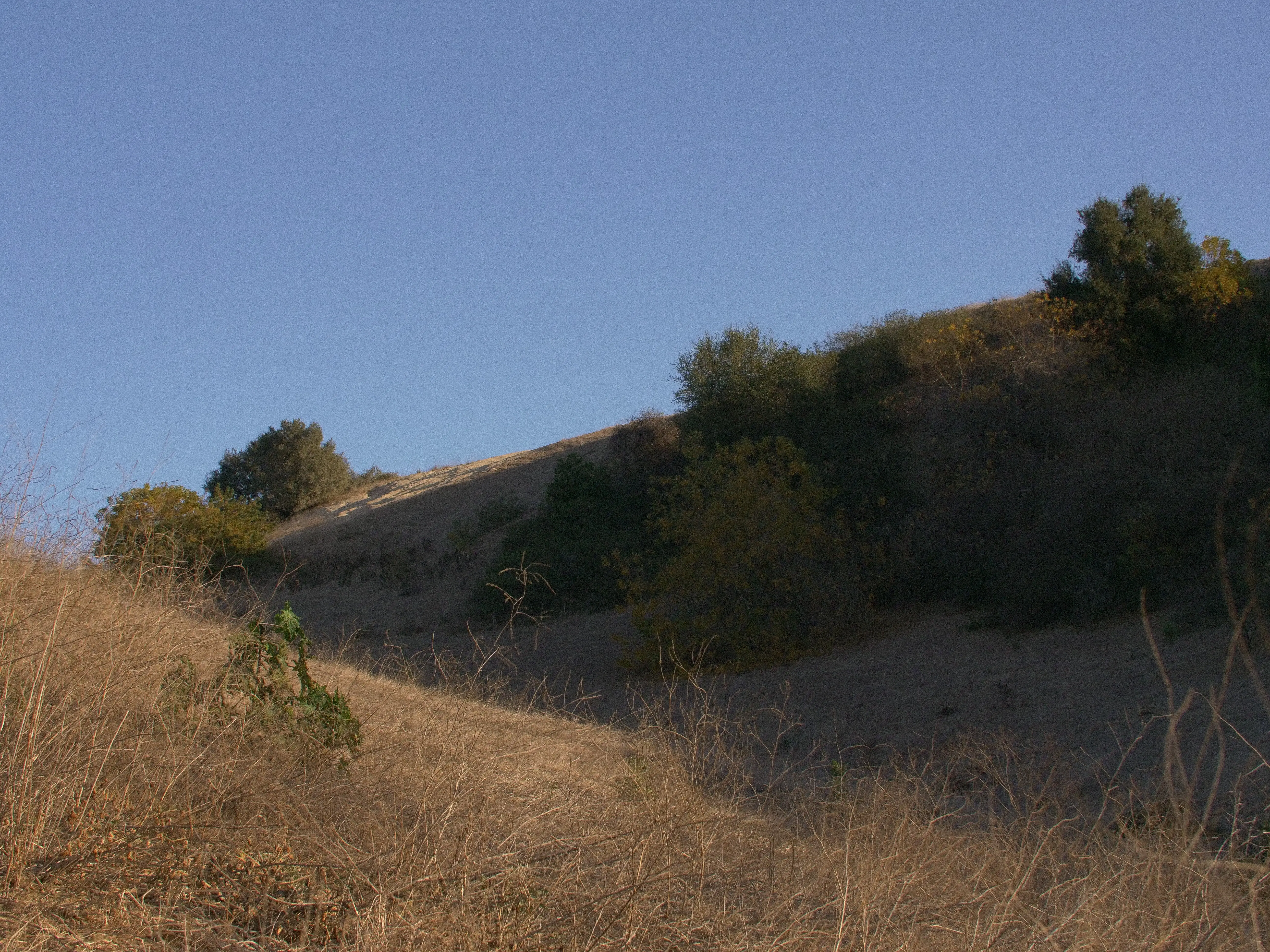
This very spring played a key role in halting the development of two dozen luxury homes in 2006, when a backhoe grading the hillside during heavy rains got stuck in wetlands surrounding the active spring. It took two cranes to pry it out of the mud. The incident created fodder for community organizers, including Save Elephant Hill (SEH) co-founder and El Sereno resident Elva Yañez, to further their longstanding campaign against the development by pursuing additional environmental review of the site’s water conditions. Neighbors who experienced landslides at the nearby Monterey Hills condos in the 1980s believed the new luxury homes would destabilize the hillside and endanger the homes below. The high-end development also signaled the threat of displacement by gentrification in El Sereno, which had historically been an affordable place for working families to buy or rent homes. The organizers’ highly strategic effort, which hinged on proving the presence of underground water, culminated in the developer selling 20 acres of the project parcels to the City of Los Angeles for $9 million.

“[Water] had this miraculous impact on a development that advocacy couldn’t stop, but water could,” says Elva. “Water plays a significant part in the history of Elephant Hill from a development and protection standpoint.”
Today, Elephant Hill remains one of Northeast L.A.'s last and largest open spaces. To some, it’s a beloved hiking spot and iNaturalist hotspot. To others it’s a convenient, though unauthorized, place to offroad or dump trash. To others still, it’s a site of rich cultural history, an ancestral homeland with an even older history of displacement, and an invaluable habitat and oasis amid densely developed Northeast L.A. To Elva, it’s the place she and her partners have dedicated themselves to protecting since 2003.

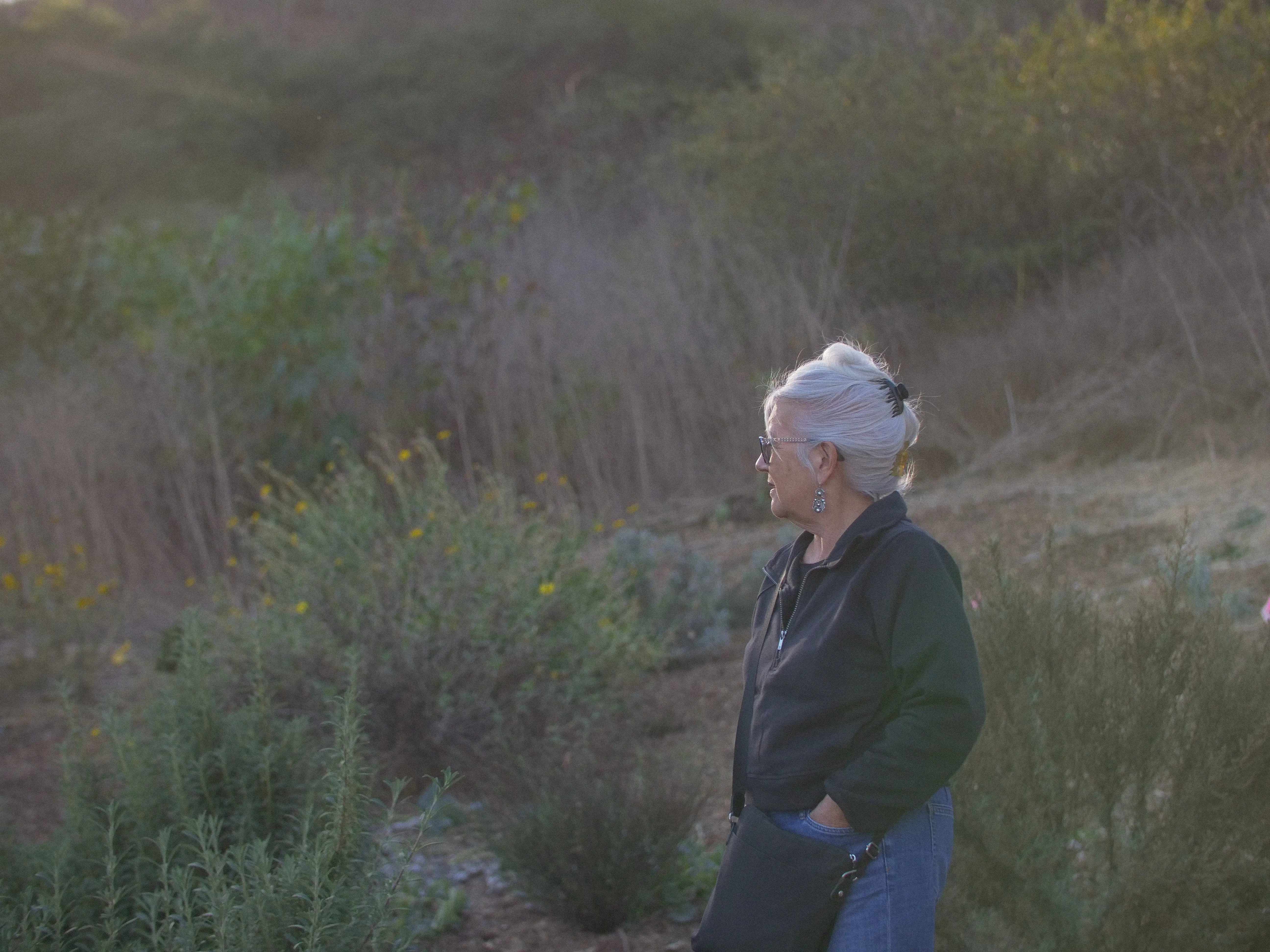
For nearly two decades, water has been a quiet ally in the fight to save Elephant Hill, and now its defenders are turning their attention to the water itself. Earlier this year, Save Elephant Hill partnered with Upper Los Angeles River Watershed Area Coordinators to submit the first application by a community organization to win funding through the L.A. County Safe, Clean Water Program (SCWP) for a feasibility study to explore stormwater improvements.
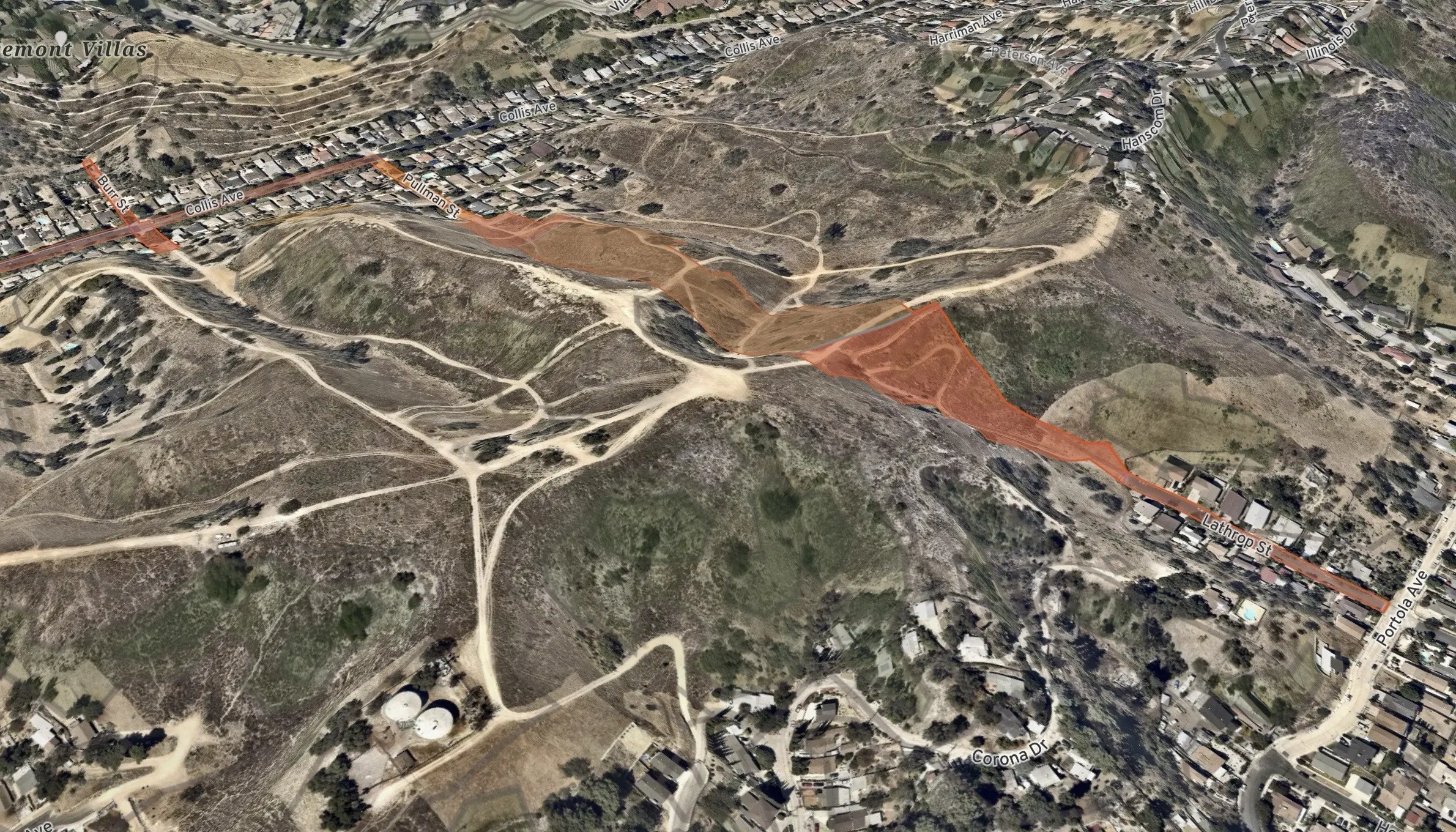
SEH submitted the SCWP Technical Resources Program application on behalf of the Mountains Recreation and Conservation Authority for its five-acre Elephant Hill Open Space Area and several surrounding streets. The feasibility study will identify opportunities to capture, cleanse, and retain stormwater on Elephant Hill to prevent polluted runoff from entering the surrounding neighborhoods, and ultimately, L.A.’s waterways. SEH’s project also seeks to provide community benefits through planting native trees and plants, creating a vibrant park and biodiverse habitat that can continue to provide a space for engaging residents around land and water stewardship.



Over the last 1.5 years, Save Elephant Hill and its many collaborators used the Living Infrastructure Field Kit to hone their application for technical assistance, with hands-on support from Spherical’s Engagement Team. Co-created by Accelerate Resilience Los Angeles, Spherical, and organizations across L.A. County, the Field Kit is a free co-design tool and set of learning resources that help communities envision, plan, and apply for funding for multi-benefit projects.
SEH used the Field Kit to sketch out and map remedies across the project site, including rain gardens, native trees and plants, bioswales, water storage tanks, storm drains, walking paths, benches, drinking fountains, and interpretive signage. The Field Kit’s data layers also helped the team estimate the costs and scope of benefits these improvements would provide.
Spherical Engagement Manager Nathaly Moreno sat down with Elva for a conversation about the significance of this milestone, and the years of community care, collaboration, and participation that led to it.