
How Compost Nourishes Community in LA
Amber X. Chen is a writer and journalist from Los Angeles.
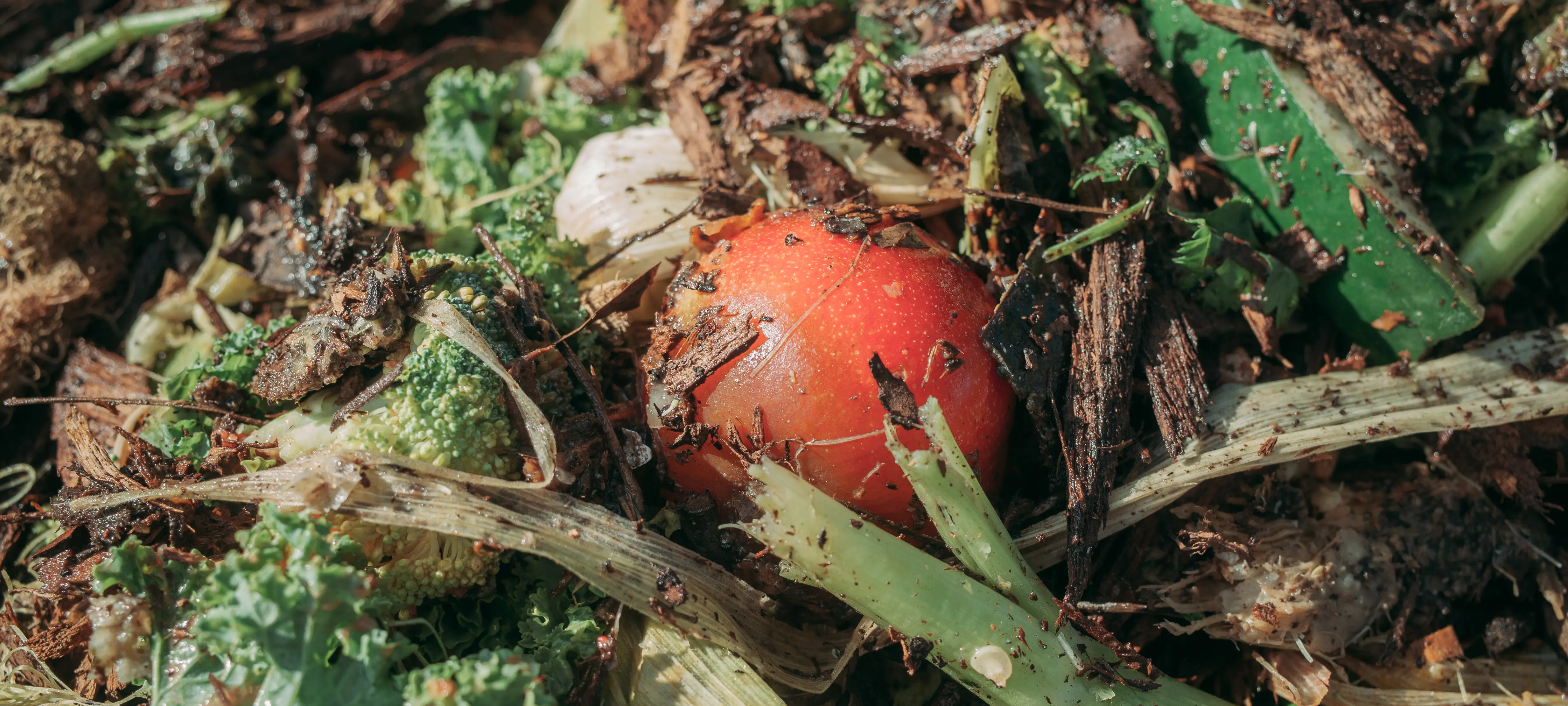
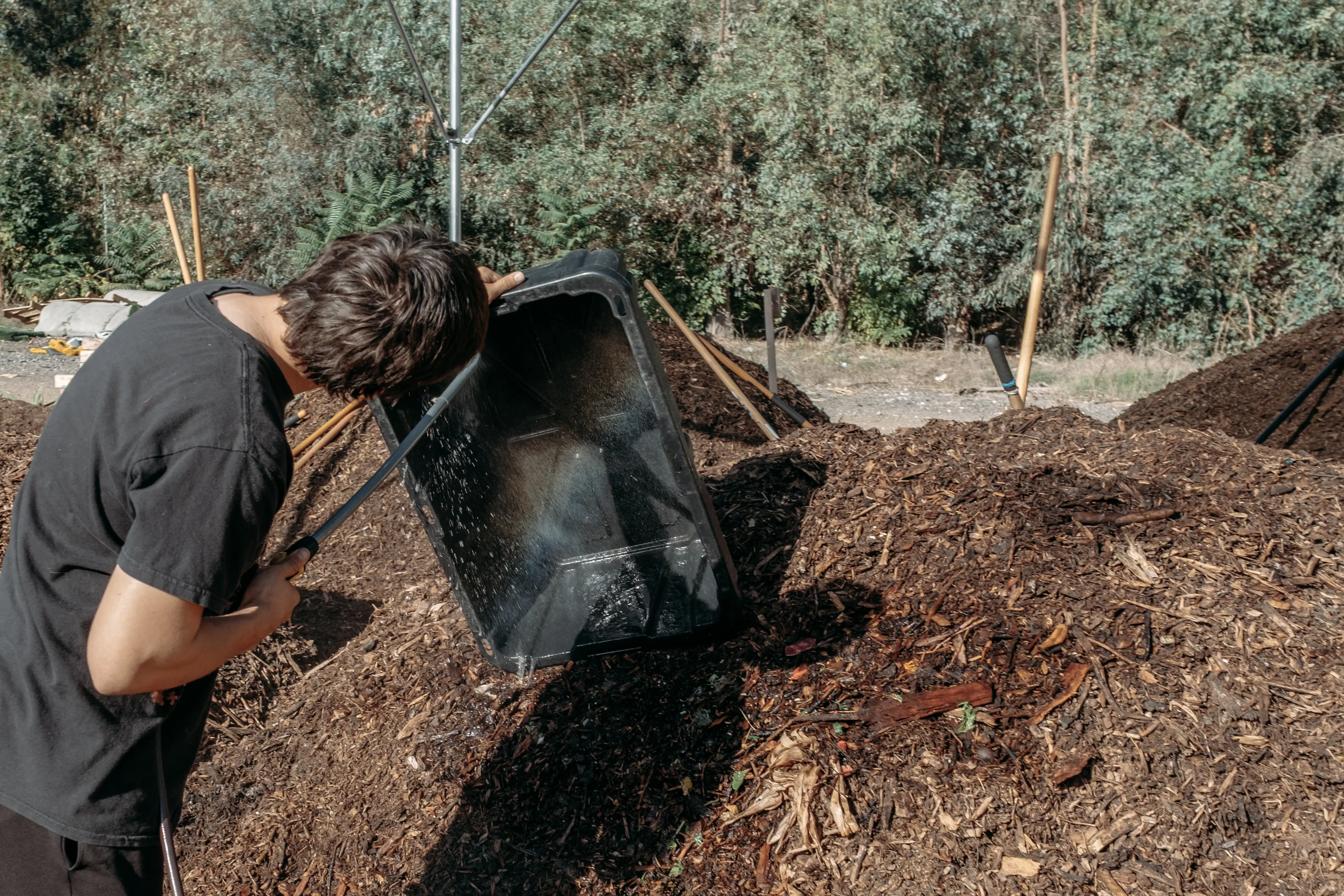
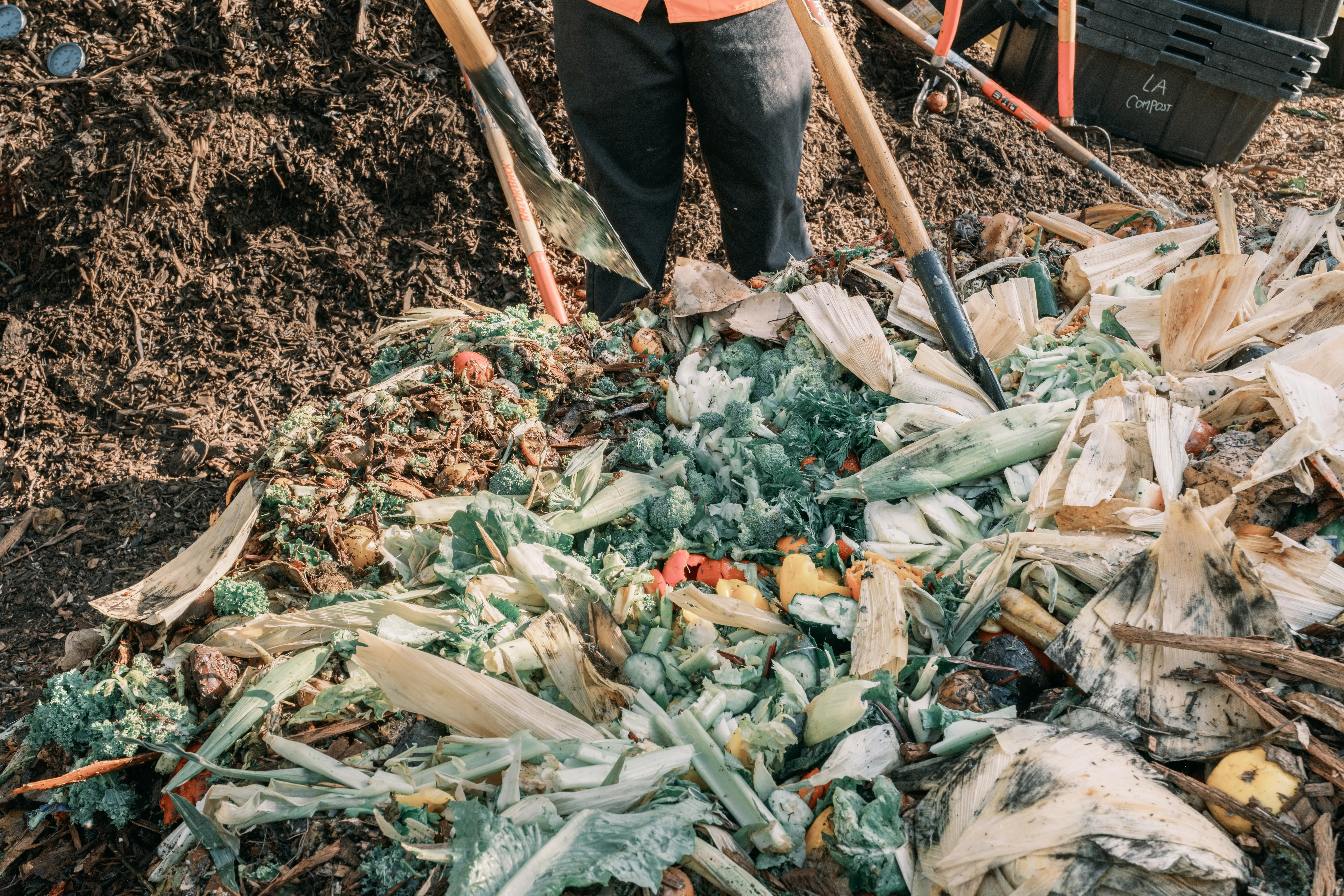
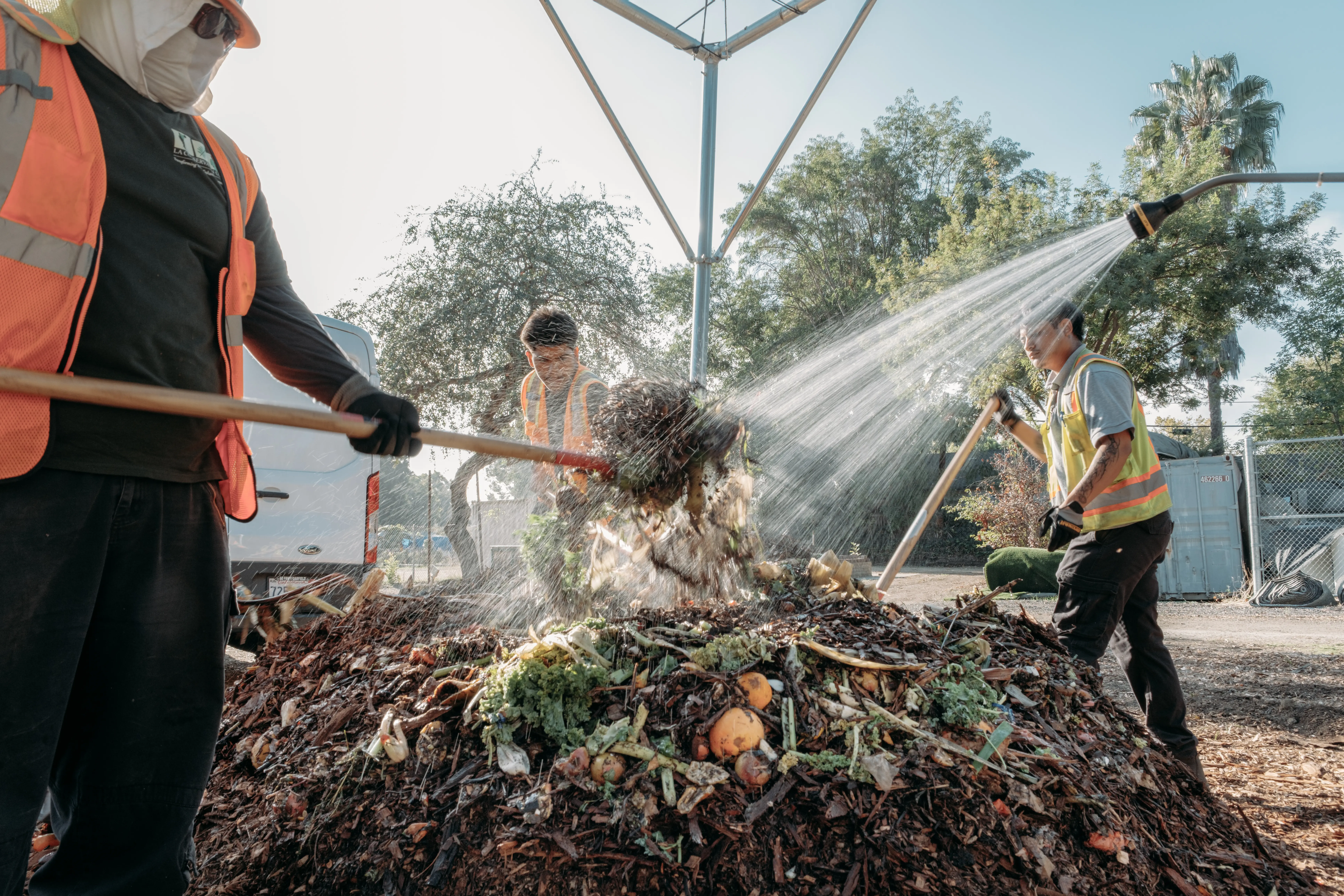
It was only 9 a.m., but the summer heat was already beginning to climb above 90 degrees in the Sepulveda Basin, an oasis within L.A.’s San Fernando Valley. Still, L.A. Compost staff and volunteers charged on, breaking apart food scraps and manually sifting out debris, all in an effort to create compost: the result of recycling food scraps, mulch, and leaves into a fertilizer that can be used to grow more food.
L.A. Compost has grown immensely since being founded by former Executive Director Michael Martinez in 2013. Back then, the burgeoning organization was just a scrappy group of four friends biking throughout the San Gabriel Valley, collecting food scraps from local juicers to create compost to distribute to local backyard gardens. Now, L.A. Compost boasts 40 staff and dozens more volunteers at 60 sites in public green spaces across the county—from Encino up north to Paramount in the south and from Culver City in the west to Irwindale in the east.
Unlike the majority of cities that rely solely on commercial composting, Los Angeles has adopted a decentralized network of community composting hubs in parks, community gardens, schools, and churches across the county led by L.A. Compost. Each hub is tailored to the unique needs of the community that it serves. In localizing compost systems, the sprawling city has been able to mold organic landscapes and urban environments together into a living infrastructure that helps connect people to the soil beneath them, the food systems that nourish them, and the communities of neighbors around them.


Ryan Jackson has been stewarding much of this work for the past year and a half as L.A. Compost’s executive director. A working dad, Jackson had been up since 4 a.m. the August morning we met. Nonetheless, he was bursting with energy and passion as he walked me through composting’s myriad benefits.
“Compost is a simple process,” Jackson says. “It happens naturally as leaf litter falls from trees and decomposes thanks to billions of microbes that help do that work.”
But humans often disrupt this natural process, he says. We throw our banana peels and coffee grounds into trash cans and whisk our peels and scraps to far-away landfills—in L.A. County, 4,000 tons of food waste is produced a day. U.S. landfills contributed some 119.8 million metric tons of methane to the atmosphere in 2022, the date of the latest federal numbers. And according to the Environmental Protection Agency, an estimated 58 percent of these emissions are from food scraps.
“Community composting for us is a way to reconstitute that natural process,” Jackson adds. “We practice biomimicry—decomposing organic material the way nature would have attempted—right here in city parks.”

Designing park hubs for each neighborhood’s needs
The Sepulveda Basin—a “gem” of the city, as Jackson describes it—is nestled between two of L.A.’s busiest freeway systems. At about 2,000 acres in size, the basin is bigger than New York’s Central Park. Its acres of green contain a wildlife reserve that’s home to more than 200 species of birds and about 100 species of native plants, plus a Japanese garden, a lake, and more.
“People sometimes want to leave the valley,” says Fernanda Tenorio, a Sylmar native and L.A. Compost’s program assistant for the San Fernando Valley. “They see it as a dry, hot place where there is nothing so lush. But it’s there. It’s hidden. It’s not always heard.”
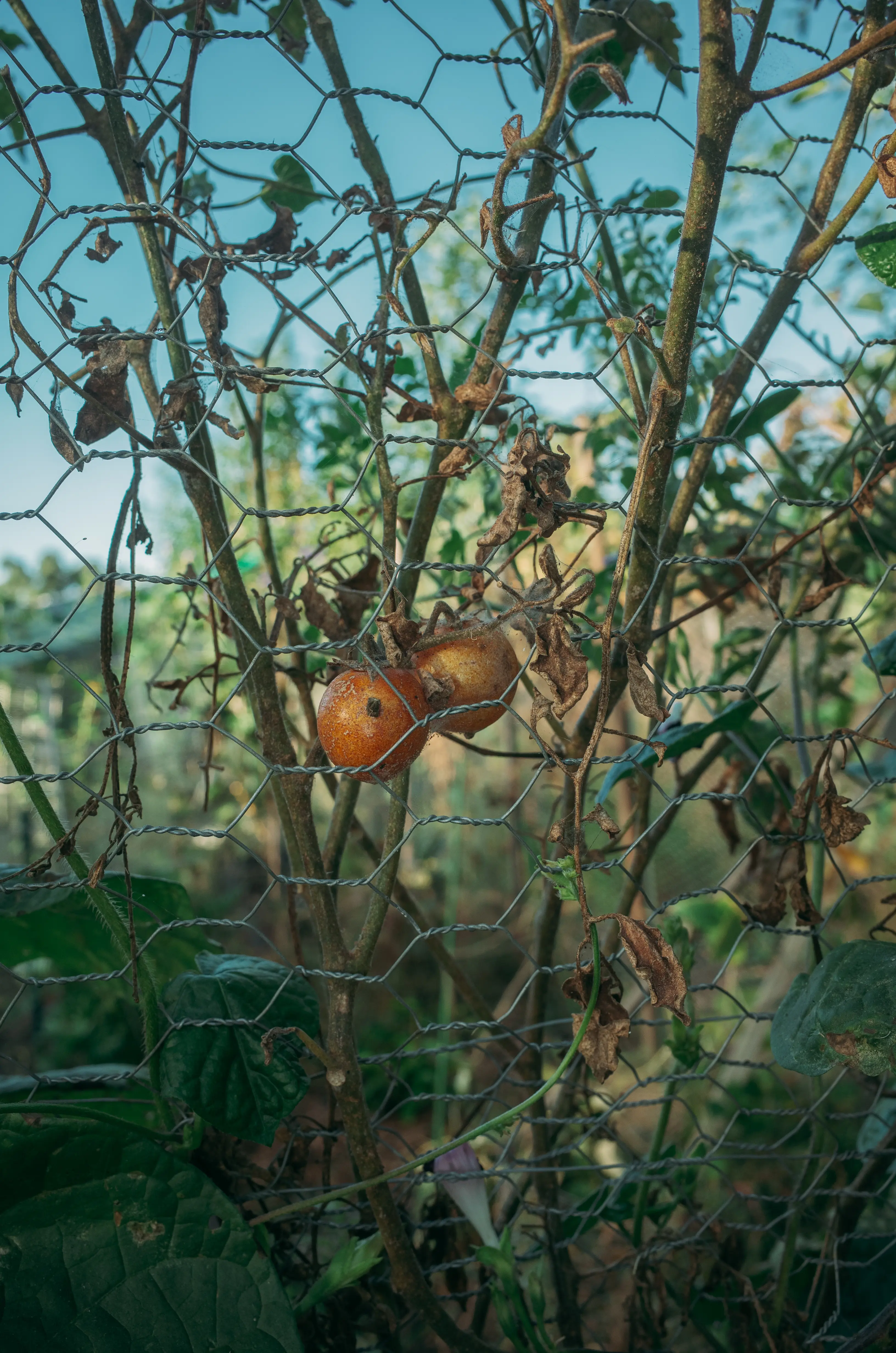
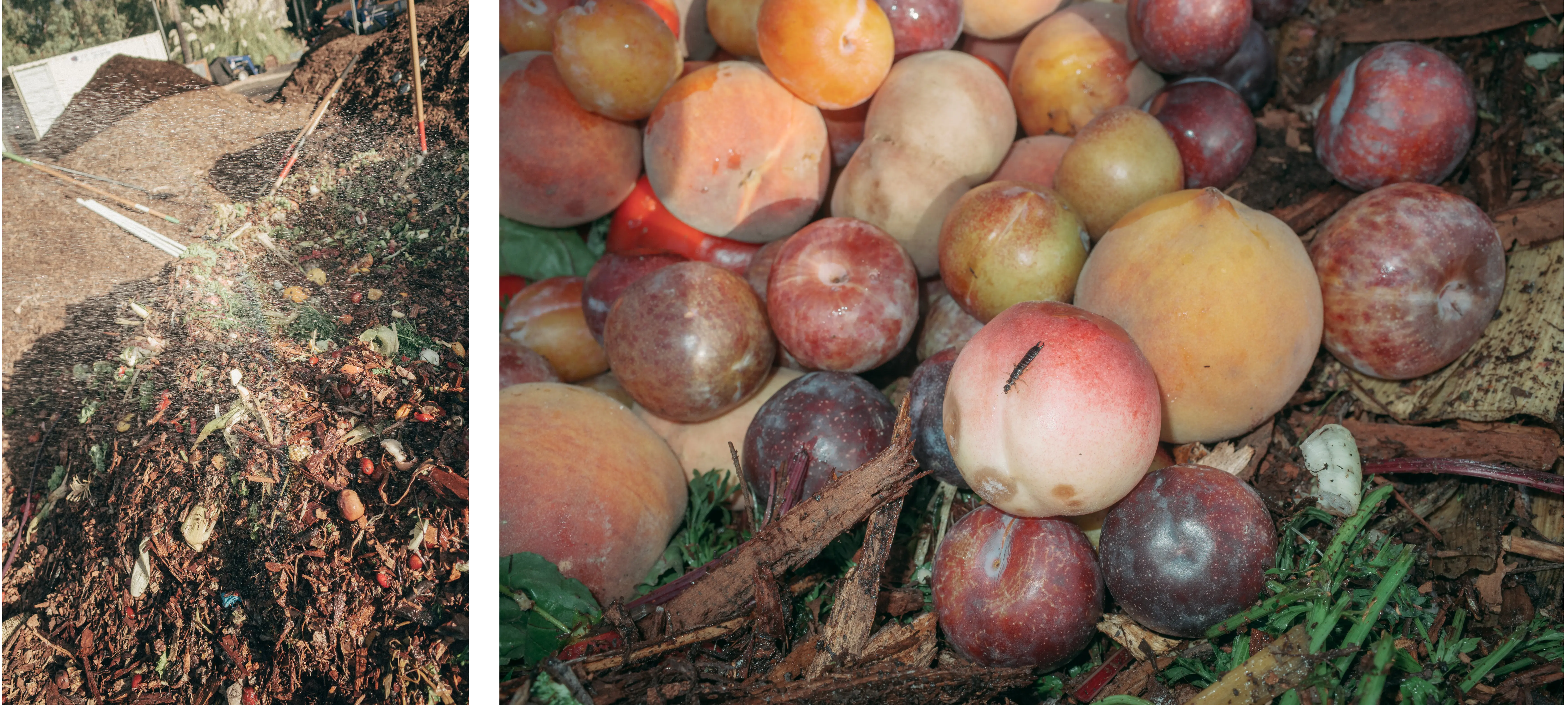
Elsewhere in the basin, there is a large-scale community garden center blooming with produce from around the world—like Chinese watercress and Peruvian tomatoes—in addition to garlic, various flowers and herbs, and more. Next to that is Sepulveda’s L.A. Compost hub, which every week processes more than a thousand pounds of food scraps, collected by L.A. Compost staff and volunteers from farmers’ markets in the neighboring valley cities of Encino and Sherman Oaks. This system—in which each compost hub is responsible only for local scraps—prevents unnecessary emissions associated with transporting those leftovers elsewhere, usually miles from their source. Plus, locals reap the rewards: The rich fertilizer is redistributed directly to the communities that contribute to it, often to the garden plots right next door.

Syd Kronenthal Park in Culver City, a city on L.A.’s west side, hosts a compost hub that looks entirely different. Instead of the large open piles found in the Sepulveda Basin, Culver City boasts a more compact system composed of five wooden bins next to a parking lot. This hub, which services Culver City’s farmers’ market, feels less wild, but the energy is electric. It’s right next to a school and single-family homes. People are riding along the bike path by Ballona Creek and playing on the basketball and pickleball courts. There’s even a stormwater feature in the park that’s under construction. Living infrastructure is everywhere if you take a closer look.
In this way, L.A. Compost’s park hubs are just one piece of the city’s larger web of regeneration. “That’s how our infrastructure becomes alive,” Jackson says.
“The solid waste system we’re operating in now is kind of like: throw it away and haul it very far, never to be seen or heard from again,” Jackson says. “Community composting flips that on its head, serving as an important piece of living infrastructure where the community is intimately involved, taking climate action you can see, feel, and touch.”
That direct interaction also helps neighbors better connect with each other.
Connecting people to Los Angeles through the soil
Through L.A. Compost’s outreach, events, and volunteer opportunities, the organization gives people from all walks of life an opportunity to come together under a shared cause. Sylvia Lambert, who lives in Tarzana, started gardening at the Sepulveda Basin years ago.
In her garden plot, Lambert, sporting a protective sun hat, tends to chayote, kale, snap peas, cabbage, arugula, oregano, dragonfruit, and carnations in a variety of colors. The process of working with her hands, surrounded by plants outside in the fresh air, is magical: “When I leave, I’m leaving like 15 years younger,” she says.
Before volunteering with the organization, Lambert had a vague idea of what compost was. As a gardener, she observed that the end of every growing season came with the disposal of greens and other plant scraps. She figured they had more to give, even in death. First, Lambert attempted to dissolve her leftover plant scraps in water, but the process took too long and carried an intensely pungent smell. Lambert then tried to create her own compost, but the texture was “like peanut butter.” Then one day, she crossed paths with Sepulveda’s L.A. Compost team. She realized she still had a lot to learn.
“I was just in love, and they’re so friendly,” Lambert says. “Everybody is willing to teach you.”

Robin Henry has also enjoyed the year they’ve just spent volunteering in Sepulveda: “It’s made me feel more part of the community because I’m not from here,” says Henry, who moved to the area in 2013. “Now, for the first time, I feel much more part of what’s really going on in the valley.”
Sam Huntington, a compost manager who helped launch L.A. Compost’s Culver City composting hub, moved to L.A. from New York in 2021 and began working with the organization shortly after. Working with the team, Huntington says, has been an “unparalleled” way to get to know the city’s distinct neighborhoods.
“L.A. Compost was founded to strengthen the connection between the people of Los Angeles and the soil beneath their feet that has been and is so often neglected,” Huntington said.
For Huntington, L.A. Compost’s solution to the city’s crisis of connection—between both the soil and its people—is also a deeply grounding way to approach environmentalism.
“The organization is amazing in this really sort of practical, grounded sense, which I think is really positive, especially in an era where there’s so much hysteria and doom and gloom about sustainability and climate change and environmental politics in this country,” he says.
It’s also highly accessible because the composting occurs in a public space. Any neighbor is welcome to join in on the fun, from get-your-hands-dirty work with pitchforks to educational events that the nonprofit hosts at schools and community centers.
“Like the rich mycelial networks that grow and thrive in our compost piles, L.A. Compost strives to foster connections between people and soil, linking organic material and communities through a cyclical and holistic process that benefits everybody,” Huntington says.
L.A. Compost knows that composting is not just about regenerating healthy soils. It’s living infrastructure in action: a vessel for community bonding, intergenerational knowledge, and a more vibrant and connected Los Angeles.

We invite partners to share this article. To syndicate, please email info@livinginfrastructure.org.

Fact-checking by Yessenia FunesCopy editing by Eleanor RobinsAmber X. Chen is a writer and journalist from L.A.’s San Gabriel Valley. Her writing has appeared in The Guardian, The Nation, No Bells, The Los Angeles Times, and more. She’s currently a student at MIT’s graduate program in science writing.Alana Celii lives and works in Los Angeles. Her photography has been published in numerous publications, including The New York Times, Atmos, Vogue, TIME, and Harper's.