More Than a Wildlife Crossing
Devon Provo is an urban planner, writer, and the senior manager of planning and program alignment at Accelerate Resilience L.A.
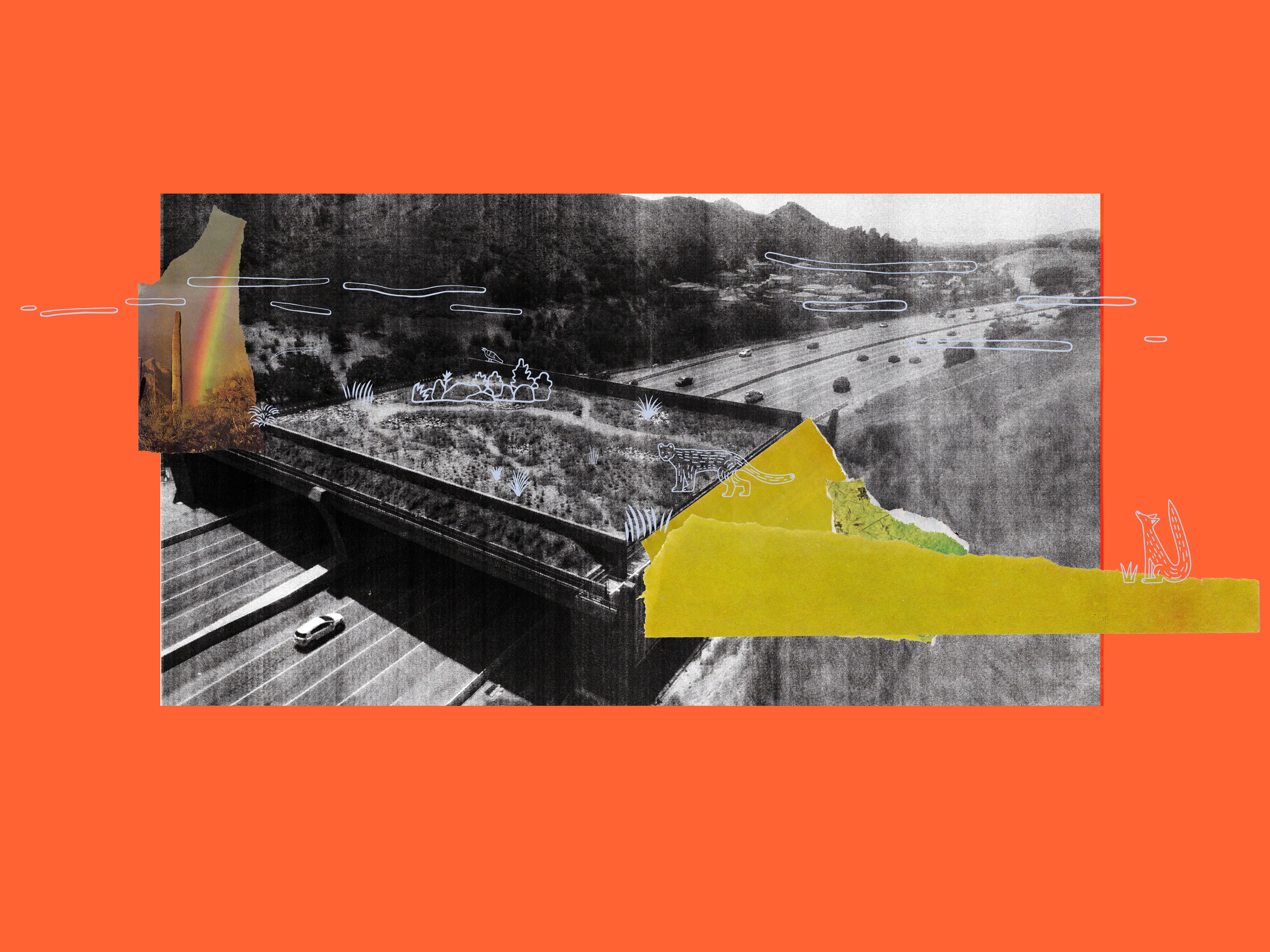
As the Wallis Annenberg Wildlife Crossing opens this December above the 101 Freeway, the Los Angeles region has a chance to cross a threshold of its own. More than just a wildlife overpass, this crossing offers Angelenos a bridge toward a new way of life: one organized around collaboration and emergence instead of separation and efficiency. The lush crossing will allow many animal species to regain access to a wider range of mountain landscapes throughout the L.A. basin. It can also inspire us to reimagine the infrastructure we create for one another and motivate us to begin inhabiting our own lives with a fuller sense of breadth and possibility.
The idea for a wildlife crossing in Liberty Canyon has been around since the 1980s, but the tragic loss of P-22, Hollywood’s most famous mountain lion, in 2022 brought widespread public attention to the true costs of human-centric infrastructure decisions. For years leading up to his death, P-22’s story captured the imaginations of Angelenos. His against-the-odds presence in the Hollywood Hills exposed how closely our lives are bound up with the broader living world, despite the artificial boundaries we've drawn between urban and natural spaces.

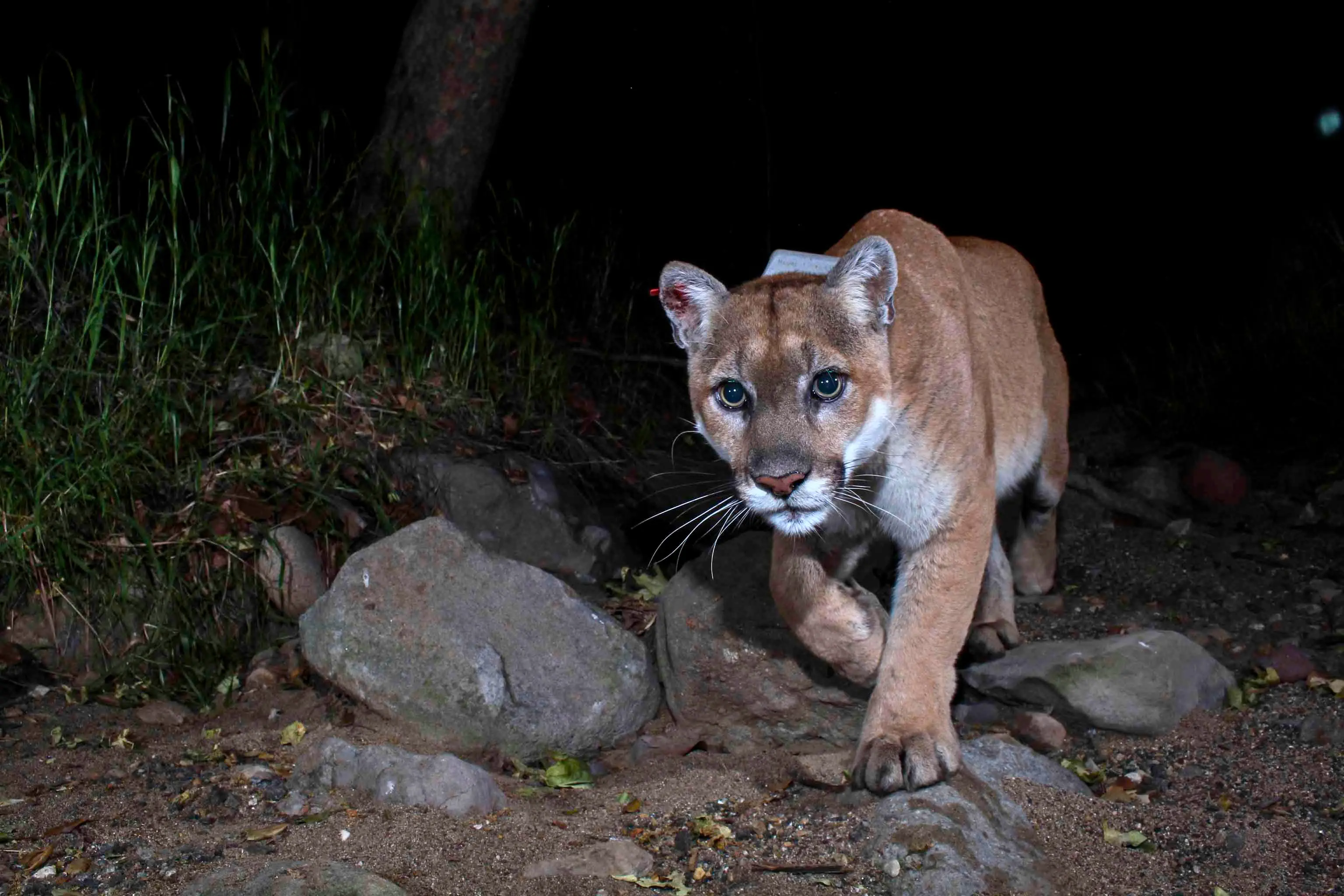
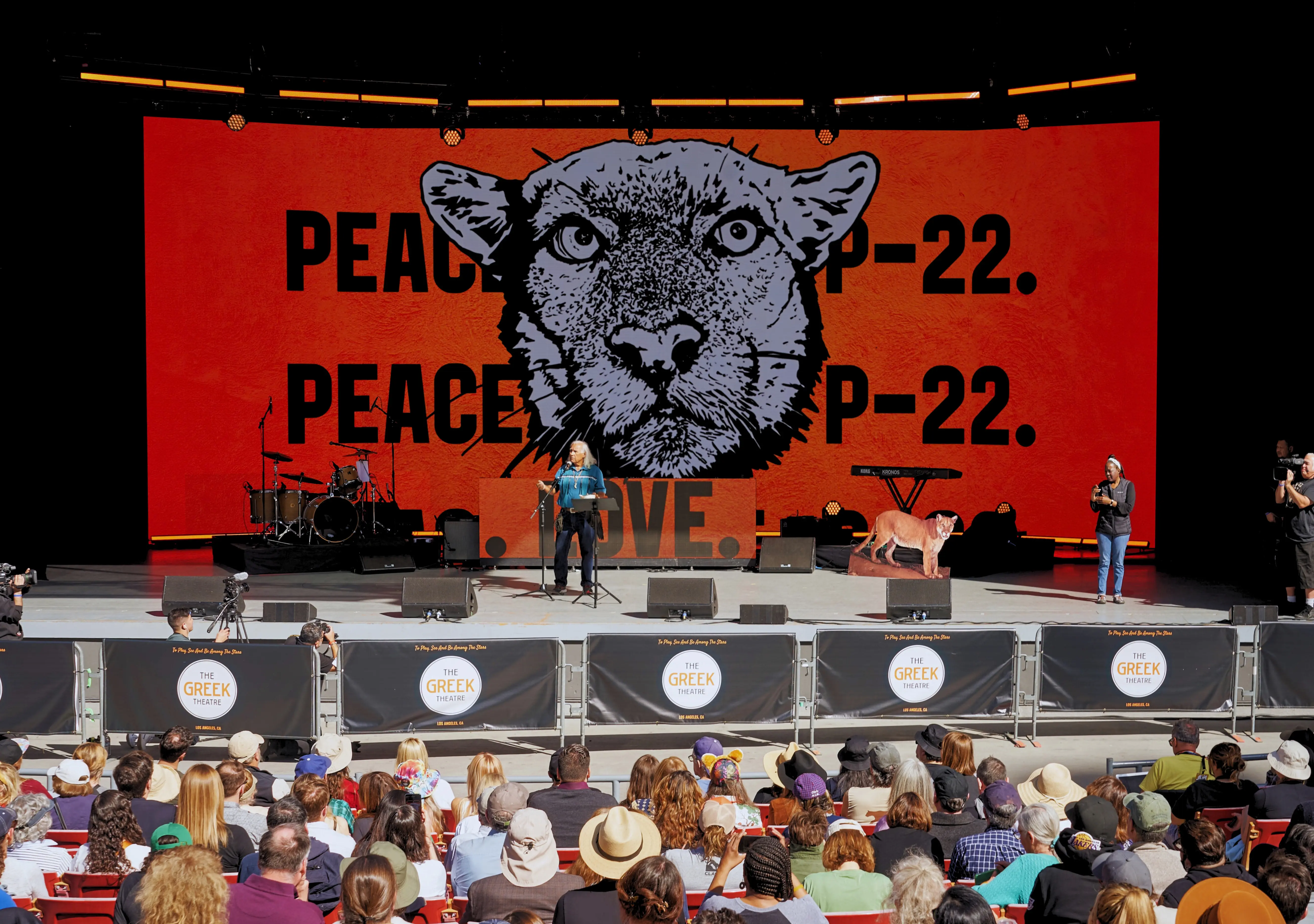
After P-22 was euthanized, having sustained severe injuries in a car accident, thousands of Angelenos crowded into the Greek Theatre to attend a celebration of life in his honor. Local tribes, politicians, scientists, artists, DJs, educators, environmentalists, and business owners gathered to mourn a creature who was both feared and revered, both a predator and a local icon. Outrage over his death inspired newfound visions of multispecies coexistence and galvanized a shared effort to make the Wallis Annenberg Wildlife Crossing a physical reality. After the funeral, donations poured in, helping the project.
Four years later, development of what will be the world’s largest wildlife crossing is almost complete. Beginning in December, it will allow safe passage for animals to travel between the Simi Hills and the Santa Monica Mountains. The bridge marks an important turning point in infrastructure planning, signaling formal recognition that infrastructure should be designed to serve not only humans, but a broader web of life. It does what living infrastructure is meant to do: sow the conditions that allow life to connect, adapt, regenerate, and thrive.

Years of research from UCLA and the National Park Service have documented how unchecked freeway development severs local ecologies and curtails possible futures for mountain lions. When big cats are restricted to insufficient patches of habitat, their ability to flourish is compromised. Competition for limited mates drives violence among peers. Isolated lions resort to inbreeding, producing offspring with low genetic diversity that makes their lineages more susceptible to disease.
Those who do attempt to cross busy freeway lanes to find connection elsewhere risk being hit or killed by traffic, like P-22. Scientists from UC Davis estimate that drivers kill one to two lions per week on California highways. Without interventions like the wildlife crossing, L.A.’s mountain lion populations could be near extinction in less than 50 years, triggering a cascading collapse across the food chain. Mountain lions aren’t the only creatures that will benefit—bobcats, mule deer, coyotes, and lizards are among the many species expected to use the crossing, too.
Just as the animal kingdom needs sufficient territory to wander and intermingle, human societies need room for emergence. Traditional infrastructure planning prioritizes the hyper-optimization of material infrastructure (roads, storm drains, utilities) while underinvesting in the relationships, creative processes, and cultural spaces that allow people to experiment, cross-pollinate ideas, and imagine new possibilities. Like wildlife, human flourishing requires room to roam—freedom to follow curiosity, encounter differences, discover our capacities, and find one’s place in the larger living fabric of the world.
Los Angeles is experiencing a mounting polycrisis, and the interconnected struggles we face cannot be overcome by a privileged few or by any singular expertise. To move through these complex challenges, we will need to draw upon the full range of our collective intelligence: embodied intuition, lived experience, technical knowledge, and creative imagination. This requires giving people the invitation, freedom, and resources necessary to discover and hone their talents because we cannot predict in advance which combinations of knowledge or relationships will produce new ideas and the possibilities needed to carry us forward.
What bridges of policy might grant communities the freedom to live out their full potential? What resource flows are necessary to allow us to explore the full range of our identities, our skills, and our whole humanity? What spaces are needed to allow us to collectively architect new structures of collaboration that honor the inherent worthiness and interdependence of all beings within our entangled living world?

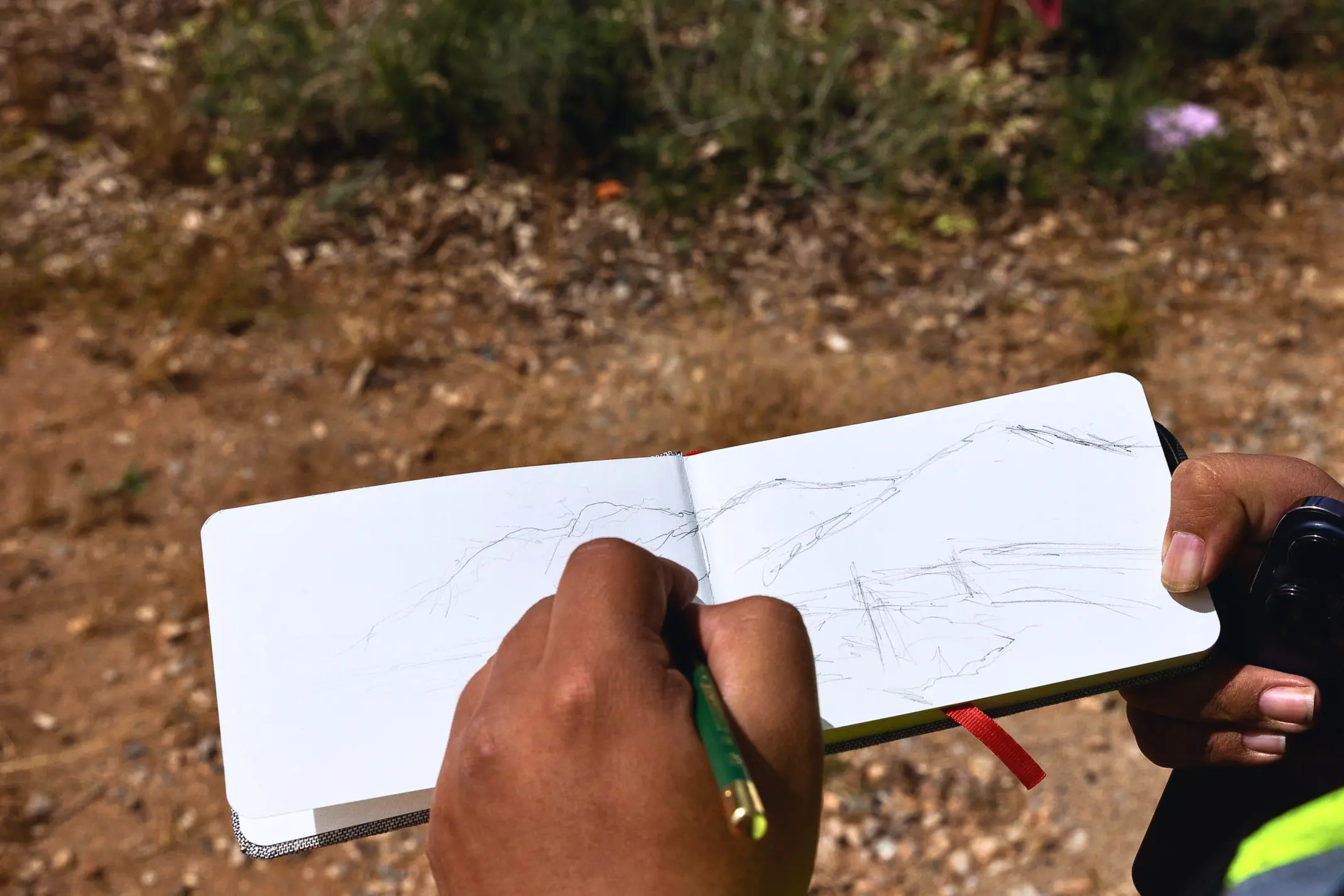
This could mean investing in “third spaces,” a term coined by American sociologist Ray Oldenburg to describe the public commons, ranging from cultural centers, libraries, and parks to informal spaces for tinkering, making things, and gathering together. It could mean granting and protecting people’s right to unstructured time at work and at home, where imagination and new ideas have space to breathe. It could mean uplifting community programming and ritual experiences as essential infrastructure, which help us build the social skills necessary to expect and tolerate failure and move through disagreements while preserving connection. The Othering & Belonging Institute at the University of California, Berkeley aptly calls this kind of relational work “bridging,” bringing people together to encounter diverse perspectives and build trust across divides.
To meet the moment, we will need to create the conditions for communities and ecosystems—including residents, artists, professionals, and more-than-human beings, like mountain lions, mule deer, and the land itself—to learn from each other, be changed by what we encounter, and offer our gifts back in return.
Living infrastructure asks us to imagine and form unprecedented coalitions among diverse beings with different histories and worldviews, who share a common interest in honoring our interdependence within the broader web of life—not unlike the coalition that once gathered at the Greek Theatre to mourn a mountain lion. With freedom to traverse a wider range of possibilities, we can find safe passage toward new futures that make life not only possible but worth living for all.

Correction (9/30/26, 9:15 p.m. PST): An earlier version of the article stated that donations after P-22’s death helped “overcome a crucial funding gap” for the wildlife crossing. We misunderstood previously published news articles on the fundraising efforts. According to Beth Pratt, regional executive director for the National Wildlife Federation's California Regional Center, the wildlife crossing was fully funded before his death. “His life inspired it being built, not his death,” she said in an email. We regret this error.
We invite partners to share this article. To syndicate, please email info@livinginfrastructure.org.

Fact-checking by Irene BantigueCopy editing by Eleanor RobinsDevon Provo is an urban planner and writer. Her work focuses on restoring relationships between people and the places they are a part of. As senior manager of planning and program alignment at ARLA, she leads cross-functional efforts to ensure ARLA’s programs, policy initiatives, and strategic communications are aligned within a living infrastructure approach. Devon received a master’s in planning from the University of Southern California and a bachelor’s in urban and environmental policy from Occidental College.