The Bus Stop Fig Tree
Justine Norton-Kertson is the co-editor-in-chief of Solarpunk Magazine and editor-in-chief at Android Press.
Marisol strolled up to the 720 stop on Tuesday afternoon with her grocery cart bumping along behind her. A straw hat pinned to her silver hair shielded her eyes from the sun while she waited for the bus. The bus always came late, so she carried an old horchata jug full of water that she used to feed the fig tree no one had planted on the vacant, private lot that sat directly behind the bench, on the other side of the sidewalk. She always minded her own business. Her business just so happened to include the crooked, dusty fig tree. The tree’s roots lifted the sidewalk enough to make it a hazard, but its shade fell exactly where the bench got hottest.
Marisol glanced up the street and didn’t see the bus, so she twisted off the cap and tipped the jug. “Drink, niño, before the bus comes.”
Other people waiting for the bus moved closer to the fig tree, and that made Marisol smile. The shelter was made of grimy plexiglass with faded, peeling ads and a metal seat that burned the backs of your thighs. Green leaves dotted branches where soft, purple figs grew and disappeared before they could hit the ground. The bus schedule read, “720 - Wilshire / Valencia.” Most people just said to get off at the fig tree.
Marisol put the cap back on the jug as a truck pulled up. Someone in a safety vest stepped out. She held a clipboard, and her name tag said “Cindy.” An arborist with a chainsaw hanging at his side came around from the passenger side. Cindy squinted like the afternoon had personally insulted her as she taped a notice to the shelter:
TREE REMOVAL IN PROGRESS FOR
VISIBILITY AND PEDESTRIAN SAFETY
TALA DE ÁRBOL EN PROCESO
PARA MEJORAR LA VISIBILIDAD
Y LA SEGURIDAD PEATONAL
이 나무는 시야 확보 및 보행자
안전을 위 해 제거될 예정입니다
“What’s the meaning of this? Marisol asked, aghast. “You’re just gonna take the tree away?”
Cindy explained the situation, going on about a property owner who didn’t want to get sued if someone tripped over the jagged sidewalk and got hurt. Cindy’s gentle voice only made the explanation worse. Marisol could feel it working overtime to cover for the absentee property owner, probably a billionaire who didn't care enough about the community to figure out a solution that didn’t involve killing the tree.
“Who does that pendejo think he is?” Marisol asked.
“Don’t ask me. I’m just doing my job,” Cindy said. “Maybe he’ll consider replacement planting in the future.”
The pavement sizzled like a greasy skillet. Marisol looked down the block. “Con este calor, no sé qué nos espera.”

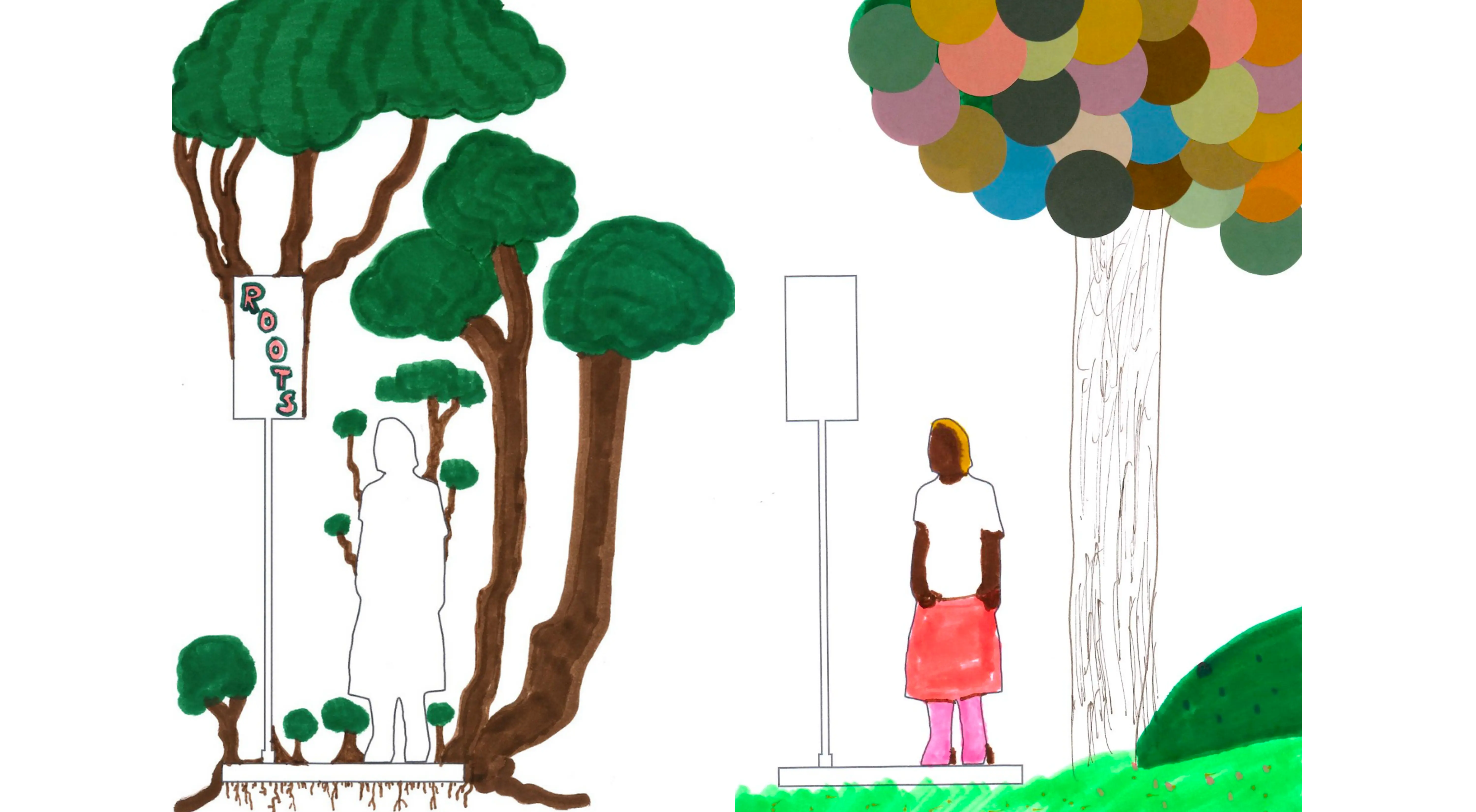
The arborist was moving his hand toward the chainsaw’s pull cord when a man named Sal stepped forward. “Wait.” He tipped his Dodgers hat and squinted. “Last summer, remember that week it was over a hundred every day? The bus was late again.”
“No me digas,” someone in the growing crowd said.
Marisol chuckled.
“You could smell the brakes cooking on every car that drove by. My shirt was soaked, and I thought, Bueno, this is how I go, standing on Wilshire in broad daylight.” Sal touched the tree’s shadow with the toe of his shoe. “This shade was just enough. It covered my feet and legs, even gave me a fig.”
Cindy glanced down at her clipboard. “I understand, sir, but removal’s already been approved. I have a contract.”
More people stopped and listened. A bus from a different line pulled up and sat waiting, its door open. The bus driver leaned out his window. “The first year it grew fruit, everybody thought we was finna die if we ate one.”
“You thought that, Marcus,” Marisol replied.
Marcus grinned. “But you ate the first one, Mar. Stood right there and took that bite like Eve in orthopedic shoes.”
Everyone laughed, even the arborist, a little.
“It doesn’t feed everybody,” Marcus continued, “but it feeds this place.”
A woman named Eun-ha touched the sun-bleached ribbon tied to the tree’s lower branch. “I put this here for my mother. She waited here for dialysis three times a week. God, she hated being sick in public.” Eun-ha smiled. “This was the last place I remember her laughing. There was this squirrel stealing figs, and Marisol said, ‘At least say thank you, cabrón.’ Mom laughed so hard, she almost peed.”
A tear broke through Marisol’s laughter, sliding down her cheek. The arborist lowered his chainsaw.
“When Mom died, I tied this ribbon here. I know, I know… it’s just a tree.” Eun-ha took a breath. “But sometimes you need somewhere you can grieve that’s not a cemetery. Know what I mean?”
Cindy didn’t write that on her clipboard. There was no box on the form for that kind of response.

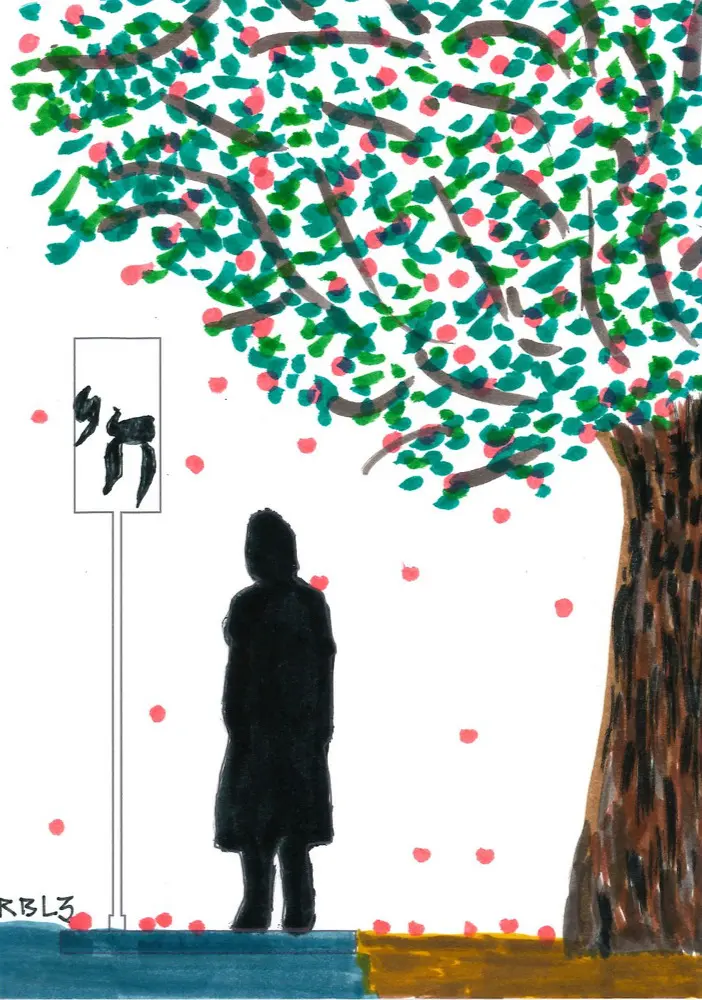
A young parent named Alejandro, holding the hand of a young boy in a school uniform, was the last to join the group. The boy kept his eyes on the leaves. His fingers moved silently.
“My son, Gael, he used to have a real hard time here after school. It was too loud and hot as hell. When the bus was late, it got real bad.”
Gael touched the bark with two fingers like he was checking a patient’s pulse.
“But then one day, he just started counting leaves and watching ants while he waited.” Alejandro looked over at Cindy. He wasn’t angry, just tired of explaining the obvious to folks with authority. “Access isn’t just ramps and signs. Ain’t that right, mijo?” He looked down at Gael.
“Seventy-two,” the boy whispered.
The arborist scratched his head and rubbed his neck. “Look, the sidewalk’s the real problem.” A murmur moved through the crowd, and he held up one hand. “Sorry, but the roots are lifting the concrete. Sooner or later someone’s gonna trip and get hurt. The runoff’s pretty bad here too when atmospheric rivers come through. Water hits the curb and has nowhere to go. It floods out this whole side of the street.”
Cindy looked relieved, like someone was finally backing her up.
The arborist looked at the tree. “It’s healthy. That’s the problem. It’s trying to live in a place that wasn’t built to let it.”
Marisol folded both her hands over the cart handle. “Then give it somewhere to go. Maybe a basin?”
Cindy looked at Marisol. “Sorry, installation of a bioswale isn’t within the scope of the work order.”
But the arborist squatted under the tree. He looked at the lifted square of sidewalk and the dry gutter. Then he looked at the bench bolted too close to the curb. His face changed.
“Water pools there,” Marcus pointed to the curb, “every big rain.”
“And people trip right there,” Sal added. “Not where the root’s at, right there where the pavement dips.”
“I think my brother’s got a concrete saw,” someone called out.
“We got room to move the bench back about a foot,” Alejandro said. “Then the shade’ll hit the whole thing.”
“I can water the tree on Mondays,” Eun-ha said.

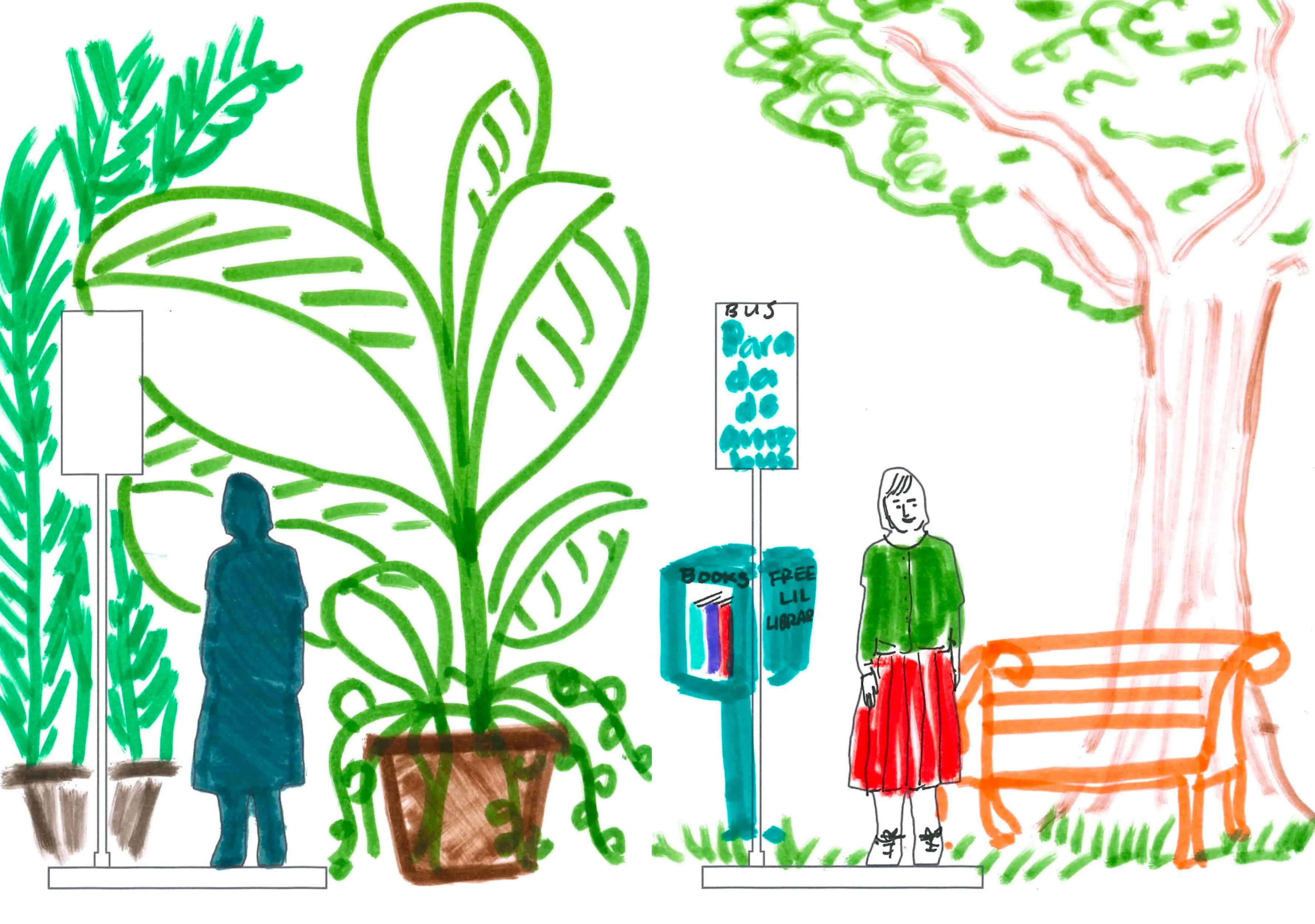
Marisol watched them. A smile crept across her lips. The bus stop had become a meeting without anybody calling one. But then the arborist suddenly unclipped the chainsaw from its strap and for a breath-stopping moment, Marisol was sure he was getting ready to cut. From the look of the crowd, they thought the same thing.
Instead, he set it on the ground and crouched near the crack again. Then he looked back up at Marisol. “Where would you put the first basin?”
Marisol looked around—up the block, down the gutter, under the bench, past the bus sign. Finally, she pointed. “Aquí, but wide. Not one of those sad pequeñito holes.”
The arborist smiled. The 720 arrived then, doors folding open beside them. But this time, no one got on. They were too busy working together to save the bus stop fig tree.
We invite partners to share this article. To syndicate, please email info@livinginfrastructure.org.

Copy editing by Eleanor RobinsJustine Norton-Kertson is the co-editor-in-chief of Solarpunk Magazine and editor-in-chief at Android Press. Their short stories have been published by Utopia Science Fiction Magazine, World Weaver Press, and others. Justine's nonfiction book, Utopian Witch: Solarpunk Magick to Fight Climate Change and Save the World, was published by Microcosm Publishing in 2024, and their debut horror novella, Gutterspace, comes out on October 13, 2026, from Stars and Sabers Publishing. You can connect with Justine at justinenortonkertson.com.“Roots of Cool: A Celebration of Trees and Shade in a Warming World" was presented in collaboration among UCLA Luskin Center for Innovation, University of California Agriculture and Natural Resources, Los Angeles Center for Urban Natural Resources Sustainability, TreePeople, Arroyo Arts Collective, The Nature of Cities, Avenue 50 Studio, USC Public Exchange, ShadeLA, Dashboard.Earth, and Accelerate Resilience Los Angeles.