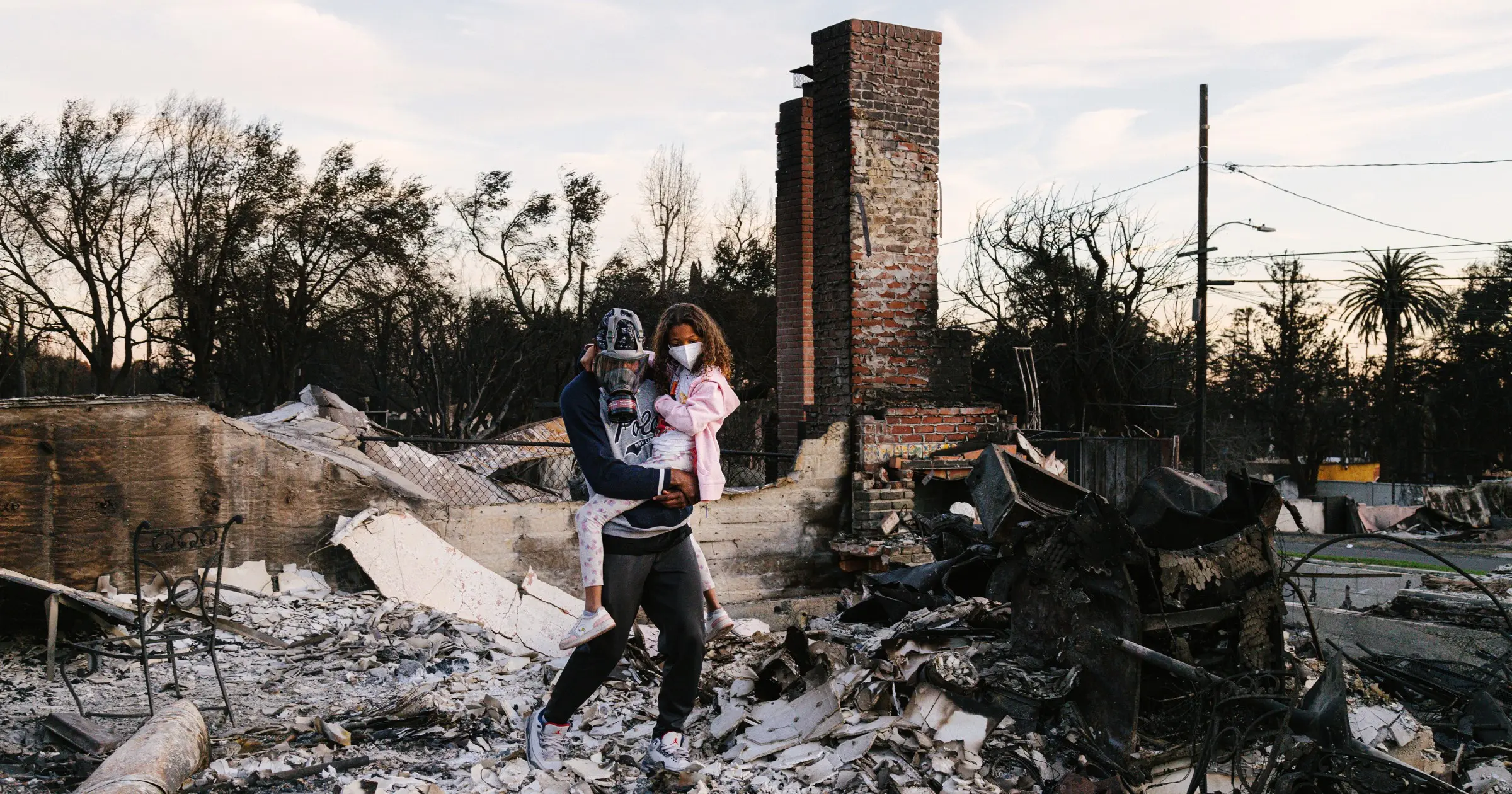
Cover image: Photography by Sydney C. [CRTSYOFSC].
Neighbors Magazine•5 min read•8.6.2025
What if the strongest infrastructure isn't concrete?
As Altadena rebuilds after the Eaton Fire, mutual aid leads the way toward a just and equitable recovery, creating systems of care that distribute resources where they're needed the most.
Essay by Camilla Sterne
Camilla Sterne is a journalist and producer whose work explores social equity, culture, climate resilience, and the built environment.
Six months after the Eaton Fire ignited in Eaton Canyon and rapidly consumed over 14,000 acres and more than 9,000 homes, schools, and businesses, the scene in Altadena remains eerie. Home lots have been cleared of rubble, creating open views that extend straight through town. Uncertainty lingers, as fears of predatory development raise questions about what kind of community will rise from the ashes of what once was.
Altadena is known for its rich history and significance for Black families who settled there due to discriminatory housing policies. One of the few places where Black homeowners could secure a mortgage, today, rates of Black homeownership in Altadena are about 30% higher than the national average. But longstanding patterns of racism and disinvestment still echo in the present—18 of the 19 people who died in the Eaton Fire were located in West Altadena (west of Lake Avenue)—mapping onto old housing discrimination wounds. While 40 L.A. County Fire Department trucks provided aid to the wealthier, whiter Palisades community, only one truck fought fires in West Altadena. Delayed evacuation orders, unanswered 911 calls, and politically fragmented leadership only added to residents’ sense of neglect and abandonment during the crisis.
Because Altadena is a tight-knit community, when systems failed, neighbors turned to one another.
In the 1930s, the Home Owners’ Loan Corporation (HOLC) created residential security maps that graded neighborhoods from A (best) to D (hazardous), which informed lending and investment practices. Areas with large populations of Black, Hispanic, and Asian residents were typically graded "D," making it difficult to obtain basic financial services. While redlining is no longer legal, its effects can still be seen today. This layer serves as a reminder of the ongoing impact of systemic racism and the importance of equitable investment in all communities.
In the days and weeks immediately following the fire, Altadena's residents and neighboring communities mobilized swiftly to support each other, forming local relief hubs with shelter, food, and medical assistance. Volunteers and residents contributed to search and rescue operations, debris removal, and the distribution of supplies. Community centers, outdoor gathering spaces, parking lots, sidewalks, and churches were transformed into temporary donation collection and distribution centers, as were individual neighbors’ yards and driveways.
The historical wildfire data layer in the Field Kit shows the burn area of the 2025 Eaton fire.
Pre-existing mutual aid networks like My TRIBE Rise,Mutual Aid LA Network, and the Pasadena Tenants Union quickly shifted focus to fire relief, coordinating donations, shelter, and resources for affected individuals. People all over compiled resource databases, sharing everything from free legal and financial advice to crisis lines and how-tos for avoiding fraud and scams.
Social justice and faith-based groups organized meetings to demand a just and equitable recovery, emphasizing the need for community-led initiatives. Many longer-term community initiatives, led by residents like Bamboo, Lynn, and Kyla were already underway.
Bamboo
“It’s about forming strong chains of community care and really learning how to take care of each other. This is the work I do in and out of crisis—it's always present for me, like it should be.”
Lynn
“The healthier the soil, the more it can break down contaminants and support healthy lifestyles.”
Kyla
"I'm hoping I can continue to bring people into seeing that we are capable of fixing our things and taking care of each other."
Altadena, long an enclave for creatives, has also seen contributions from its vibrant artistic community. Artists have organized exhibitions to raise funds and awareness, conducted archival work to preserve history and culture, and connected fire victims with lost family photographs.
‘Land Memories: Voices of Altadena’ aims to document and preserve Altadena's history as a haven for Black homeownership and a crucial site of Black artistry and culture that was home to visionaries like Octavia Butler, Sidney Poitier, and Eldridge Cleaver.
Left: Photograph: Jeffrey Sugishita/courtesy of Aram Moshayedi/One Hundred Percent
Right: Location Found: New York Drive & Hill Avenue. Note: Print by photographer Seydou Keïta Courtesy of Claire Schwartz/Eaton Fire Found Photos
Residents continue to navigate the unknown timelines of rebuilding their community and trying to heal, while efforts like this and many others persist. Working to address both immediate needs and the longer-term health of their community, one thing is clear: when neighbors help neighbors, communities become more resilient. Rebecca Solnit writes in her book, A Paradise Built in Hell, "Many events plant seeds, imperceptible at the time, that bear fruit long afterward." As on the fire-scarred hillsides that surround Altadena, those seeds are already sprouting.
This was written by Camilla Sterne, designed by raya hazell, and shaped through the creative review cycles of ARLA and Spherical. Special thanks to Kyla, Bamboo, and Lynn for sharing their stories and embodying the spirit of resilient social infrastructure.